
Field Hockey Turf
Ekip Grass produces short-pile synthetic turf for field hockey and builds the complete pitch: base, shock pad, turf, irrigation and equipment. The FIH field list for Türkiye names Ekip Spor as the FIH Certified Manufacturer of a Category 2 hockey pitch in Konya. Hockey needs a faster, flatter surface than football, so the turf and the base are specified differently.
- 91.40 × 55.00 mField of play, FIH Rules of Hockey
- 3 buildsWater-based · sand-dressed · sand-filled
- FIH listedKonya pitch · Ekip Spor as manufacturer
Short answer
Which hockey turf does your pitch need?
- International and high-level club hockey: a water-based, unfilled turf gives the fastest, most even ball roll, but it is watered before every session.
- Club, school and community hockey: a sand-dressed turf plays dry, so it needs no irrigation and costs less to run.
- Pitches shared with other sports: a sand-filled turf takes football and training too, but it is slower for hockey.
Hockey surface types
Three ways to build a hockey pitch
Water-based
A very dense, short pile with no infill. Before play the turf is watered by pop-up sprinklers or by cannons at the side of the pitch, which makes the ball run fast and true and lets players slide.
This is the build used for international hockey. It needs an irrigation system, a reliable water supply and clean water, and the base must drain the water that runs through.
Sand-dressed
A short pile with sand filling the lower part of the carpet. The fibre tips stay free, so the ball rolls on the fibres, not on the sand.
It plays dry and is common for club and school pitches. Rainwater drains through the carpet into a permeable base.
Sand-filled
A slightly longer pile filled with sand close to the top. It is the most forgiving build for shared use: football, training and school sport can use the same pitch.
For hockey it is the slowest of the three, because the ball meets more sand and less fibre. Our Dogu Grass is made in piles from 20 mm for this kind of use.
Side by side
Hockey surfaces compared
| Water-based | Sand-dressed | Sand-filled | |
|---|---|---|---|
| Pile | Short, very dense, no infill | Short, sand in the lower part | Longer, sand close to the tips |
| Played | Wet, watered before play | Dry | Dry |
| Ball speed | Fastest and most even | Fast | Slowest of the three |
| Water | Irrigation system and supply | Rain drains through | Rain drains through |
| Typical use | International and high-level club | Club, school, community | Shared with football and training |
| Under the turf | Shock pad on a level base | Shock pad on a level base | Shock pad often used |
From our range
Turf for hockey and shared pitches

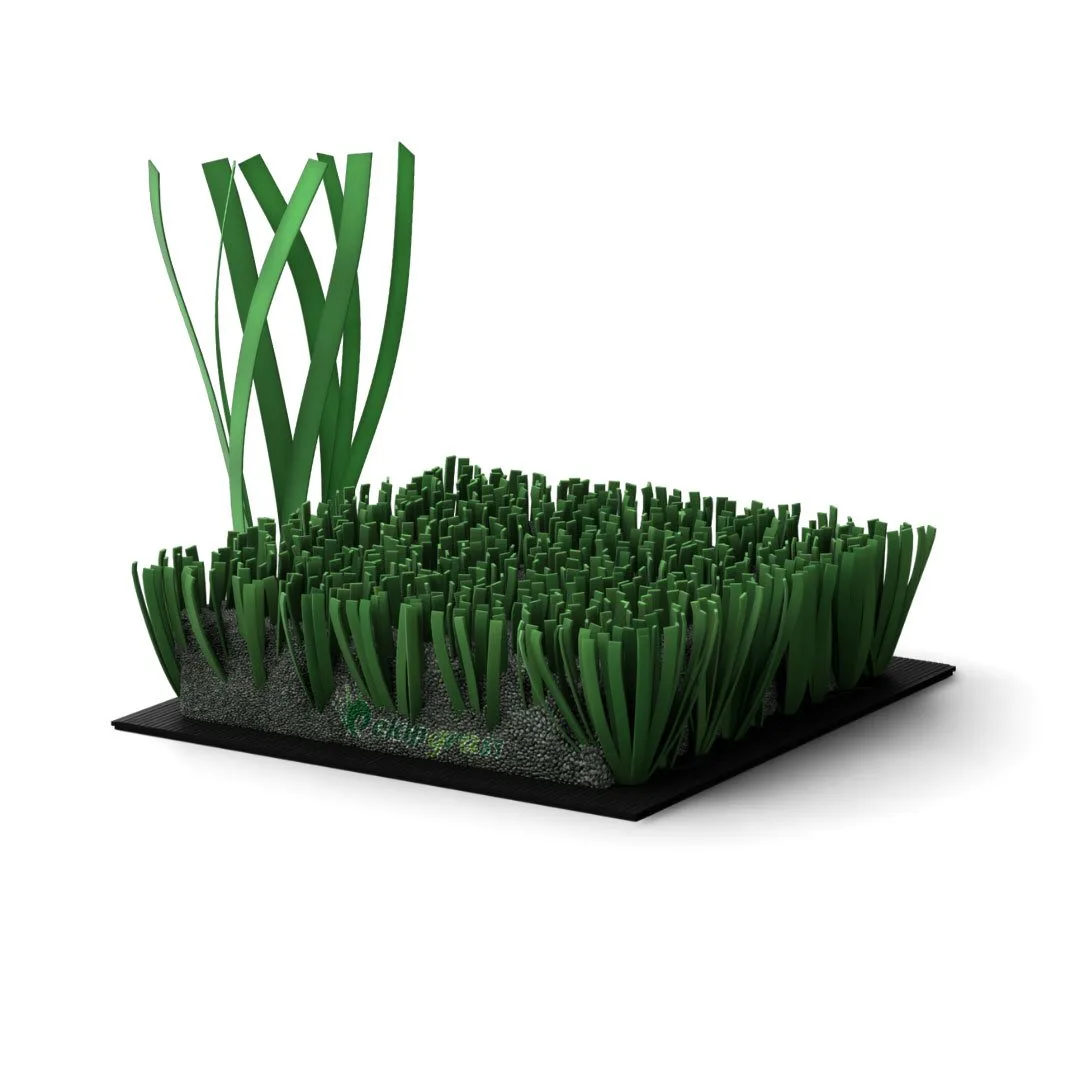
FIH Quality Programme
How hockey turf is certified
The International Hockey Federation (FIH) certifies hockey turf in two stages. The turf product is tested in a laboratory first. Each installed pitch is then tested on site and receives a field certificate in a category that matches the level of play. Field certificates expire and are renewed by re-testing.
The FIH list for Türkiye, checked on 5 November 2026, shows the Konya synthetic hockey field as Field Category 2, with Ekip Spor as FIH Certified Manufacturer and Ekip Hokey Turf as the turf. Its field certificate expired on 1 November 2026, and the list does not show a renewal yet. Ask us for the current status before you rely on it in a tender.
Source: FIH members, Türkiye field list.
- Laboratory testThe turf product is tested against the FIH requirements.
- Site testBall roll, ball rebound, shock absorption and evenness are measured on the finished pitch.
- Field certificateIssued in a category that matches the level of play.
- Re-testThe certificate expires and is renewed by testing again.
Planning
How big is a hockey pitch?
The field of play is 91.40 m long and 55.00 m wide. The shooting circles are drawn 14.63 m from the goalposts, and the 23 m lines cross the pitch 22.90 m from each back line. Run-off areas are added around the field of play; their size depends on the competition level, so we confirm them with the federation before the base is designed.
| Field of play | 91.40 × 55.00 m |
|---|---|
| Shooting circle radius | 14.63 m |
| Goal, inside | 3.66 m wide, 2.14 m high |
| Run-off | Set by competition level |
| Field of play area | 5,027 m² |
From survey to first push-back
How we build a hockey pitch
Site check
We review the ground, the water supply and the level of play, and agree the build.
Base
An engineered aggregate or porous asphalt base is laid to tight level tolerances.
Shock pad and turf
The shock pad goes down, then the short-pile turf with lines tufted in.
Water and equipment
Irrigation for water-based pitches, goals, dugouts and fencing if they are in the scope.
Handover
You receive care instructions; FIH site testing is arranged if your league requires it.
Maintenance
Looking after a hockey pitch
Water-based pitches
Keep the water clean and the sprinklers working, and clean the surface regularly so it does not turn slippery or grow algae.
Sand-dressed and sand-filled pitches
Brush regularly so the pile stands up and the sand stays level. Remove leaves and organic debris before they block drainage.
Other sports
Surfaces for other sports
Questions
Questions about field hockey turf
Water-based or sand-dressed: which one do we need?
It depends on the level of play and your water supply. Water-based turf gives the fastest, most consistent ball roll and is used for international matches, but it needs irrigation before every session. Sand-dressed turf plays dry and costs less to run, and suits club, school and community hockey. Check which FIH field category your league or federation requires before deciding.
Can a hockey pitch also be used for football?
A sand-filled pitch can take both sports, though each plays less well than on its own surface. The short pile is firmer than football turf, and football boots wear it faster. If football will be the main use, a dedicated football pitch is usually the better plan. Tell us the expected hours of each sport and we can suggest a layout.
What maintenance does hockey turf need?
Regular brushing keeps the pile upright and the sand evenly spread. Leaves, dust and organic debris must be removed, because they block drainage and encourage moss and algae. Water-based pitches need clean water and periodic cleaning to keep the surface from getting slippery. Deep cleaning by specialist machines is usually scheduled once or twice a year depending on use.
Is your hockey turf FIH certified?
FIH certificates are issued to installed fields, and the manufacturer is named on the field record. The FIH list for Türkiye, checked on 5 November 2026, shows a Category 2 synthetic hockey pitch in Konya with Ekip Spor as its FIH Certified Manufacturer. That field certificate expired on 1 November 2026, and no renewal is listed yet. We do not claim a general FIH status beyond that record. For a new project we can discuss the testing route your federation requires.
What do you need from us for a quote?
Send the pitch size (a full hockey field with run-offs, or a smaller training area), the location, the existing ground and whether you want a water-based, sand-dressed or sand-filled build. Tell us if irrigation, fencing, goals, dugouts or lighting should be included, and the FIH category if the pitch will be tested.
Planning a hockey pitch?
Send us the pitch size, the location and the level of play. We reply with the build-up and a quote.
- Pitch size and run-offs
- Country and city
- Water-based, sand-dressed or sand-filled
- Water supply on site
- Goals, fencing, lighting