
Hybrid Grass Systems
Ekip Grass manufactures hybrid grass systems at its plant in Dilovası, Kocaeli. Synthetic fibres are anchored in the rootzone, natural grass grows up between them and its roots grow down around them. Players touch living grass, and the fibres hold the surface together where play wears it out.
- Natural + syntheticLiving grass, reinforced
- ISO 14001Scope names hybrid grass manufacture
- DilovasıMade at our Kocaeli plant
Short answer
What is hybrid grass?
- A reinforced natural pitch. Natural grass is grown through a small share of synthetic fibres. It is still a grass pitch, not artificial turf.
- It plays like natural grass. Ball roll, footing and the feel underfoot come from the living grass.
- It holds up better where play is heavy. When leaves wear away in goalmouths and the centre, the fibres and the roots around them keep the surface level and stable.
- It needs natural grass care. Mowing, irrigation, feeding and enough light, as any grass pitch does.
Three ways to reinforce grass
Hybrid grass systems compared
Carpet system
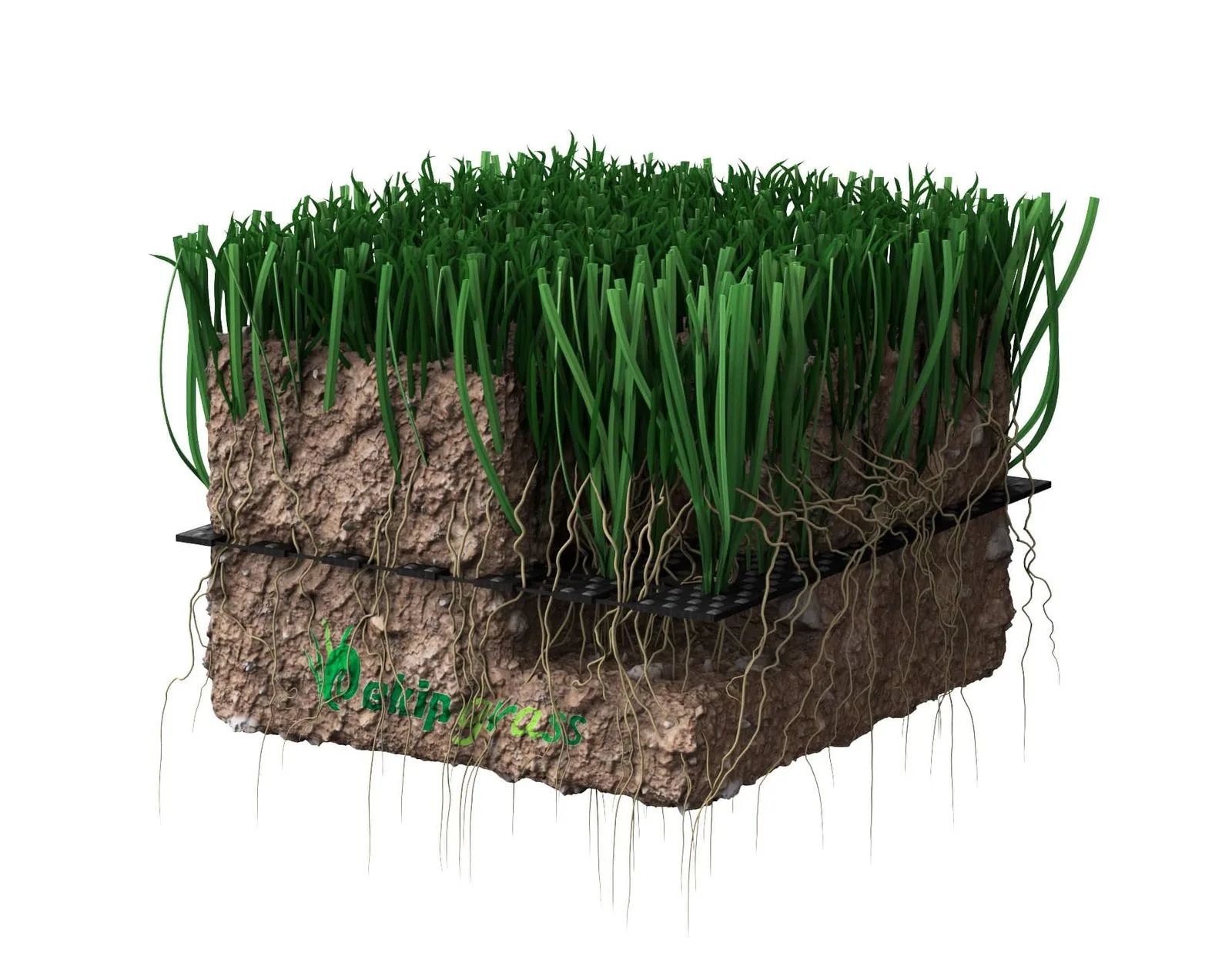
Synthetic fibres are tufted into a woven backing that is laid on a prepared sand rootzone and filled with sand. Natural grass is then seeded or turfed. As it grows, its roots pass through the backing and grip it, so the fibres, the backing and the grass work as one layer.
This is the build shown in our hybrid turf cross-section. It is laid on a new or rebuilt rootzone, so it suits new pitches and full pitch renovations.
Stitched system
Machines inject vertical synthetic fibres into a finished natural grass pitch, typically to a depth of around 20 cm on a close grid. Only a small share of the surface is synthetic.
Because it can be added to an existing pitch, it is common in stadiums that keep their rootzone and want a stronger surface.
Mixed rootzone
Short synthetic fibres are mixed into the sand rootzone before it is laid. Grass roots wrap around the fibres and stabilise the sand.
It reinforces the root layer rather than the surface, and is used for training pitches and high-wear zones.
Side by side
Natural, hybrid and artificial turf compared
| Natural grass | Hybrid grass | Artificial turf | |
|---|---|---|---|
| Playing surface | Living grass | Living grass with synthetic fibres | Synthetic fibres with infill |
| Wear in heavy-use areas | Wears through first | Fibres keep the surface together | Highest hours of play |
| Recovery after damage | Regrows, needs rest | Regrows around the fibres | Repaired by replacing or patching |
| Mowing, water, feeding | Yes | Yes | No mowing; water only if used for cooling |
| Light needed | Yes | Yes | No |
| Before first match | Grow-in period | Grow-in period | Ready after installation |
| Typical use | Lower-use pitches | Stadiums and elite training pitches | Community, school and all-weather pitches |
Video
Watch how a hybrid pitch is built
Our own 3D animation follows a carpet hybrid pitch from the subsoil up, the same sequence as the cross-section at the top of this page.
- DrainageTrenches, drain pipes and crushed stone
- CarpetFibre carpet between two rootzone layers
- GrassSeeded, fed, rooted and mown
2 min 34 s · from the Ekip Sport channel on YouTube. The video loads from YouTube only when you press play.
From subsoil to first match
How a carpet hybrid pitch is built
Survey
We review the ground, drainage, water supply, shade from the stands and the playing calendar.
Drainage
We cut trenches into the subsoil, lay drain pipes in them, backfill them with fine crushed stone and spread a crushed stone layer over the top.
Rootzone
A sand-based lower rootzone is laid over the drainage layer and levelled to falls.
Hybrid carpet
The fibre carpet is rolled out and joined, then upper rootzone sand is brushed in between the fibres.
Seeding and feeding
We sow selected grass varieties, then start the grow-in with granular and liquid fertilisers and irrigation.
Rooting and mowing
Roots grow down through the backing. Regular mowing brings the grass to playing height; the first match is set once the roots hold the surface.
Made and documented
Produced at our Dilovası plant
We manufacture artificial grass and hybrid grass systems at our production site in Dilovası, Kocaeli. Our ISO 14001:2015 environmental management certificate, issued by FQC (no. 14.26.20518.2000243.U, valid to 26 February 2027), names hybrid grass manufacture in its scope.
ISO 14001 covers how production is managed for its environmental impact. It is not a playing performance test of a pitch.
- Hybrid carpetMade at our Dilovası plant.
- Rootzone and drainageDesigned for the site.
- GrassSeeded or turfed on the finished carpet.
- Grow-inRoots take hold before the first match.
Maintenance
Looking after a hybrid pitch
Grass care
Mow regularly, water and feed as for a natural pitch. Keep blades sharp so leaves are cut, not torn.
Sand and brushing
Top-dress with sand and brush so the fibres stay supported and upright among the leaves.
Recovery
Rotate goalmouth and training areas where possible, and overseed worn patches in the growing season.
Light and air
In stadiums where the stands shade the pitch, grow lights and air movement help the grass recover between matches.
Questions
Questions about hybrid grass
What is the difference between hybrid grass and artificial turf?
Hybrid grass is a natural grass pitch reinforced with synthetic fibres; the playing surface is living grass and it is maintained like a grass pitch. Artificial turf is fully synthetic, usually with sand and rubber or other infill, and needs no mowing or light. Hybrid suits venues that want natural grass with better wear resistance; artificial turf suits pitches that must take many hours of play every day in any weather.
Does hybrid grass still need mowing and watering?
Yes. The playing surface is natural grass, so it needs mowing, irrigation, feeding and enough light. The synthetic fibres reduce damage and help the surface recover, but they do not replace grass care. Plan for a groundskeeping team and a maintenance budget as you would for a natural pitch.
Can our existing natural grass pitch be converted?
It depends on the system. A carpet hybrid is laid on a new or rebuilt sand rootzone, so it is usually part of a full renovation. Stitched systems can be added to an existing pitch if the rootzone is suitable. Send us the age and build of your current pitch and we will advise which route fits.
How long before the first match?
There is always a grow-in period, because the grass must root through the system before it is played on. The time depends on the season, the climate, the grass species and whether the pitch is seeded or turfed. We agree a grow-in plan and a target date for the first match at the quote stage.
Which certificates cover your hybrid grass?
Our ISO 14001:2015 environmental management certificate, issued by FQC (no. 14.26.20518.2000243.U, valid to 26 February 2027), names hybrid grass manufacture in its scope. ISO 14001 covers how we manage the environmental side of production; it is not a performance test of a pitch. Ask us for the specification of the fibres and backing offered for your project.
What do you need for a quote?
Send the pitch size and location, whether it is a new pitch or a renovation, the current drainage and rootzone, how many hours of play a week it must take, and how much the stands shade it. Mention whether you need material only or a complete build.
Planning a hybrid pitch?
Send us the pitch size, the location and how it will be used. We reply with a build-up and a quote.
- Pitch size and location
- New pitch or renovation
- Current drainage and rootzone
- Hours of play per week
- Shade from the stands
Related guides
-
Hybrid Grass vs Artificial Grass: What Is the Difference?
Hybrid grass is reinforced natural grass; artificial grass is fully synthetic. How they differ in play, recovery, maintenance and cost, and which… Read the guide -
Natural Grass vs Artificial Grass: Key Differences
How natural grass and artificial grass differ in playing feel, use, maintenance, water, heat, environmental impact and football rules, and where each… Read the guide -

Football Pitch Surface Types: Natural, Hybrid and Artificial
Football is played on natural grass, hybrid grass and artificial turf, plus hard courts for informal games. This guide explains each surface, what the… Read the guide