
Summarize this article with AI Open a summary of this article in your preferred assistant
Natural grass is a living surface that needs light, water, mowing and rest, and it limits how many hours a pitch can be used. Artificial grass can be used most days in most weather and needs no irrigation to grow, but it heats up in sun, needs brushing and infill care, and must be replaced at the end of its life.
Natural grass is a living plant that needs light, water, feeding, mowing and rest to recover from wear. Artificial grass is a synthetic carpet that needs no growing conditions and can be used for more hours, but it gets warmer in sun, needs its own maintenance and has to be replaced at the end of its life. The right choice depends on how many hours the surface is used, the climate, the light on the site and who will look after it.
How do they compare side by side?
| Factor | Natural grass | Artificial grass |
|---|---|---|
| Surface | Living leaves on a soil or sand rootzone | Synthetic yarn, often with sand and rubber or organic infill |
| Use between rests | Limited; worn areas need time to regrow | Can be used most days and in most weather |
| Routine care | Mowing, irrigation, fertiliser, weed and disease control | Debris removal, brushing, infill top-up, cleaning |
| Light and climate | Needs sunlight and a suitable growing season | Not affected by shade; gets hot in direct sun |
| Ready to use | After seeding or turfing and a grow-in period | After installation and infilling |
| End of life | Renovated or reseeded in place | Carpet and infill removed, then recycled or disposed of |
How do they feel to play on?
Natural grass in good condition is the reference surface for football. Its leaves and soil give a specific ball roll, bounce and grip, and they change with moisture and season. FIFA runs a separate Quality Programme for Natural Playing Surfaces, with a standardised testing procedure and reporting format, because condition matters so much for player safety.
Artificial turf is designed to give consistent values for ball roll, shock absorption and rotational traction. Those values depend on the yarn, infill, shock pad and maintenance, so two artificial pitches can play quite differently. A worn or compacted artificial pitch becomes harder and faster.
Which needs more maintenance?
Natural grass needs more frequent work and more specialist knowledge. A grass pitch is mown, watered, fed, aerated, overseeded and protected from disease, and the groundsman has to plan use around recovery time. Shade from stands, heavy rain or a dry summer can quickly reduce its quality.
Artificial grass needs less frequent but still regular care. Leaves and litter are removed, the pile is brushed to keep it upright, and on infilled pitches the infill is levelled and topped up where play moves it. Our article on how to clean artificial grass explains the routine for gardens and pitches.
What about water, heat and the environment?
Natural grass needs irrigation in dry periods, fertiliser and often pesticides. In return it cools the air around it, takes up carbon while it grows and lets rain soak into the soil.
Artificial grass needs no irrigation to grow, although some sports pitches are watered before play to change ball speed or to cool the surface. Synthetic fibres heat up in strong sun, so shade and play times matter in hot climates. Rubber infill can move off a pitch if edges and drainage are not designed to contain it, and the whole carpet becomes waste at the end of its life, so ask how the system can be recycled before you buy.
Are both allowed in football?
Law 1 of the IFAB Laws of the Game says the field of play must be wholly natural or, if competition rules permit, wholly artificial, and it also allows a hybrid system that combines artificial and natural materials. Artificial surfaces must be green. For national-team competition matches and international club competitions, an artificial surface must meet the requirements of the FIFA Quality Programme for Football Turf, unless The IFAB grants an exception.
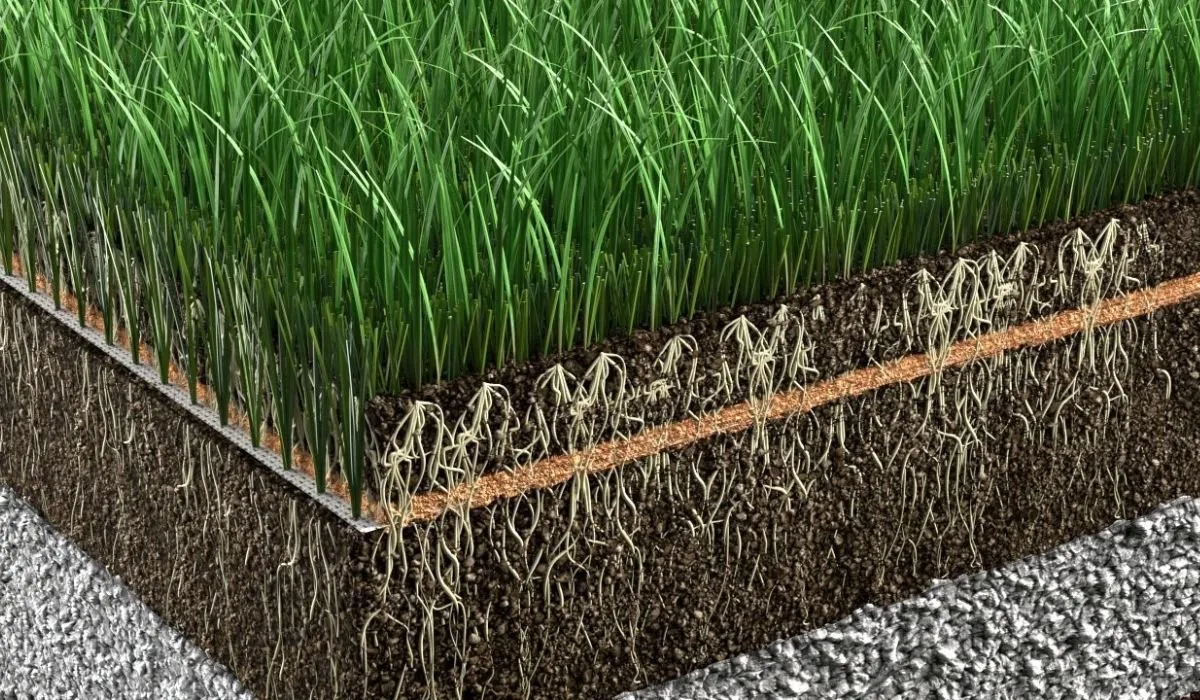
Many clubs and schools use both: a natural or hybrid main pitch for matches and an artificial pitch for training and community use. A hybrid grass pitch keeps living grass as the playing surface while synthetic fibres reinforce it; we compare it with artificial turf in hybrid grass vs artificial grass.
Which should you choose?
Natural grass suits sites with good light, a growing season, water supply, trained staff and a use level low enough for the grass to recover. It is often the choice for top-level match pitches and for gardens where the owner enjoys lawn care.
Artificial grass suits pitches that are used every day, schools and municipal facilities with many teams, shaded or roofed areas, dry regions and gardens where the owner wants low upkeep. For sport, look at football grass systems; for gardens, see the landscape grass range made by Ekip Grass in Dilovası, Türkiye.
0 comments
Leave a comment
Your comment will be published after review.