

Summarize this article with AI Open a summary of this article in your preferred assistant
To install artificial grass in a garden, remove the existing turf and topsoil, fix an edge restraint, build a compacted free-draining sub-base with a fine laying course on top, lay a weed membrane, roll out the grass with the pile in one direction, join seams with tape and adhesive, fix the edges, and add infill only if the product needs it.
To install artificial grass in a garden, you remove the existing turf and topsoil, build a compacted and free-draining base, lay a weed membrane, roll out the grass with all the pile facing one way, join the seams, fix the edges and brush the surface. Most of the work, and most of the result, is in the base. Grass laid on a poor base shows every dip and holds water.
What tools and materials do you need?
- Spade, rake, wheelbarrow and a turf cutter for larger areas
- Plate compactor (can be hired) and a long straight edge or spirit level
- Edge restraint: timber, composite or metal edging, or an existing kerb
- Crushed stone for the sub-base and a fine laying course such as granite dust
- Weed membrane
- Artificial grass rolls, joining tape and outdoor turf adhesive
- Sharp utility knife with spare blades, ground pins or nails
- Stiff brush, and silica sand if the product calls for infill
How do you prepare the ground?
The ground layers below the grass each have a job. The table shows a typical garden build-up from the bottom up.
| Layer | Typical material | Purpose |
|---|---|---|
| Subgrade | Existing soil, cleared and compacted | Firm footing for the layers above |
| Sub-base | Crushed stone | Load bearing and drainage |
| Laying course | Granite dust or sharp sand | Smooth, level surface for the grass |
| Weed membrane | Permeable geotextile | Reduces weed growth from below |
| Artificial grass | Turf carpet, with infill if specified | Finished lawn |
- Measure and plan. Measure the area, sketch it, and plan the roll layout so that seams are few and fall away from the main view. Order a little extra to allow for trimming.
- Excavate. Remove the old turf, roots and topsoil to a depth that leaves room for the sub-base and laying course, so that the finished grass sits level with paths and patios.
- Fit the edge restraint. Set the edging around open sides. It holds the base in place and gives you something to fix the grass to.
- Build the sub-base. Spread the crushed stone in layers and compact each one with the plate compactor. Give the surface a slight fall so that heavy rain runs off rather than pooling.
- Add the laying course. Spread a thin layer of granite dust or sharp sand, screed it flat with a straight edge, dampen it lightly and compact it again. See granite dust for artificial grass for how this layer works.
- Lay the weed membrane. Roll it over the compacted base, overlap the joints and trim it at the edges.
How do you lay and join the grass?
- Roll out the grass. Unroll each piece and let it settle flat before cutting, ideally in warm weather. Point the pile of every piece in the same direction, usually towards the house or main viewing point.
- Cut from the back. Turn the edge over and cut along the backing between the stitch rows, so that you do not cut through the yarn.
- Join the seams. Butt two trimmed edges together without overlap or gap. Fold them back, lay joining tape under the line with the shiny side down, apply adhesive and press the edges down. Walk along the seam and keep the yarn out of the glue.
- Trim and fix the edges. Cut the grass tight to the edging and fix it with pins, nails or adhesive, according to the edge type.
How do you finish the lawn?
Some landscape grasses are designed to be used with a layer of silica sand brushed into the pile, which weighs the carpet down and helps the fibres stand. Others need no infill. Follow the product sheet. Ekip's Lokilux Grass and Lokisoft Grass are both listed with infill not required.
Finish by brushing against the pile with a stiff brush to lift the fibres, then check edges and seams once more after a few days of use.
What mistakes should you avoid?
- Laying grass straight onto soil, which settles and leaves dips
- Skipping compaction, or compacting a dry laying course that stays loose
- Mixing pile directions, which makes pieces look like different colours
- Overlapping pieces at seams instead of butting them
- No fall on the base, so water stands after heavy rain
After installation, regular light cleaning keeps the lawn tidy; see how to clean artificial grass.
How Ekip Grass can help
Ekip Grass manufactures landscape grass in Dilovası, Kocaeli, Türkiye. Garden products are listed under landscape grass, and questions about a specific installation can be sent through the contact page.
Frequently asked questions
Can artificial grass be laid directly on soil?
It is not recommended. Soil settles unevenly and drains poorly, so the lawn develops dips and puddles. A compacted stone sub-base with a fine laying course gives a stable result.
Can artificial grass be laid on concrete?
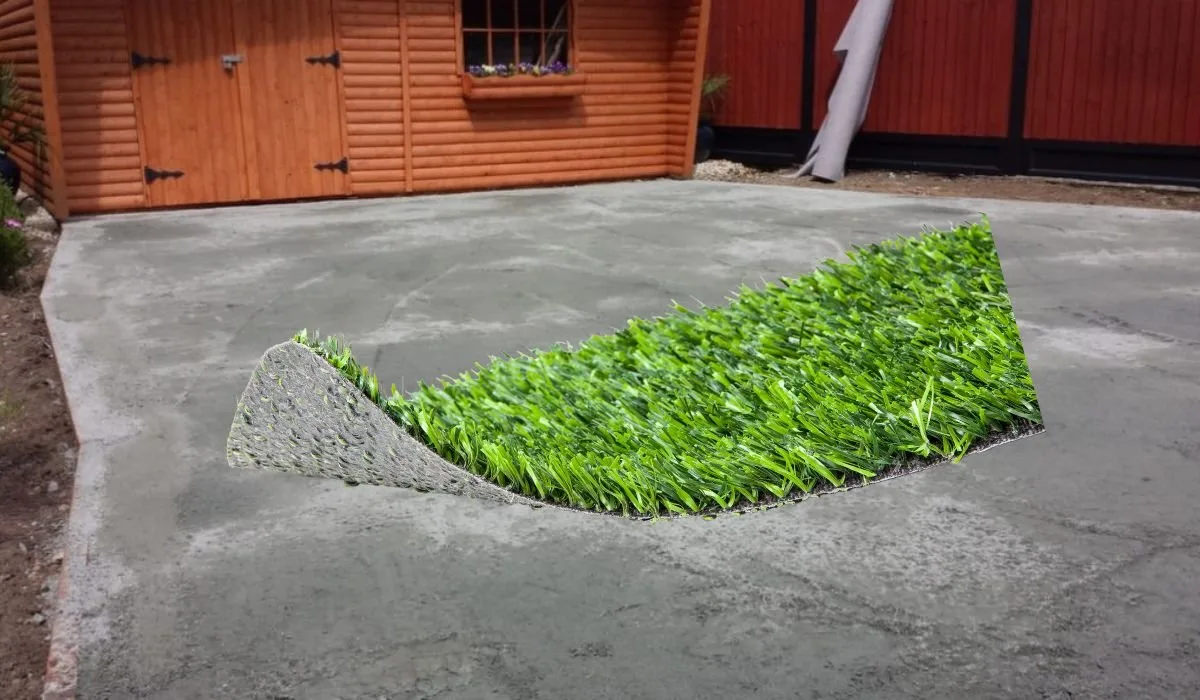
Yes, if the slab is sound and water can run off or drain through it. A foam underlay is usually laid first to soften the surface and hide joints in the slab.
Does garden artificial grass need sand infill?
It depends on the product. Some landscape grasses are designed for silica sand infill, while others, such as Lokilux and Lokisoft, are listed with infill not required.
Which way should the pile face?
All pieces should face the same direction, usually towards the house or the main viewing point, so that the colour looks even across the seams.

0 comments
Leave a comment
Your comment will be published after review.