Tennis Court Surfaces
Ekip Grass builds tennis courts with three surface options: the ITF-classified Ekip Flex surface, acrylic hard courts and sand-filled synthetic grass. The ITF classifies Ekip Flex as Category 2, Medium-slow, valid to 24 July 2027. The synthetic grass is tufted at our facility in Dilovası, Kocaeli.
- ITF Category 2Ekip Flex · Medium-slow · to Jul 2027
- 3 surfacesEkip Flex · acrylic · sand-filled turf
- 668.9 m²Area of one court with ITF run-off
Short answer
Which tennis court surface should you choose?
- Clubs and coaching with a classified surface: Ekip Flex, rated ITF Category 2 Medium-slow, gives players more time on the ball.
- Competitive and shared courts: an acrylic hard court gives a firm, even bounce and can also be lined for basketball.
- Hotels, schools and wet climates: sand-filled synthetic grass drains through the surface and needs little daily work.
Surface options
Three ways to build the court
Ekip Flex
Ekip Flex is our classified tennis surface. The International Tennis Federation tested it and placed it in Category 2, Medium-slow. The classification was set using the product composition in ITF test report 01/02-24-L-LFR-740-A and is valid until 24 July 2027.
A medium-slow court keeps less of the ball's speed after the bounce, so rallies last longer. That suits clubs, coaching programmes and courts shared by players of different levels.
The ITF rating applies to the surface built as tested. We install the court to the tested composition and send the details with your quote.
Acrylic hard court
An acrylic court is built on a stable asphalt or concrete slab. Layers of acrylic resin go on top: a filler coat that evens out the base, textured colour coats that set grip and ball speed, then the lines. A cushioned version adds a rubber layer under the colour coats to reduce the load on joints.
Hard courts give a predictable bounce and can be lined for basketball too. They must be dry for play, because a wet acrylic court becomes slippery. Acrylic sports coatings are part of our ISO 9001 certified production scope.
Sand-filled synthetic grass
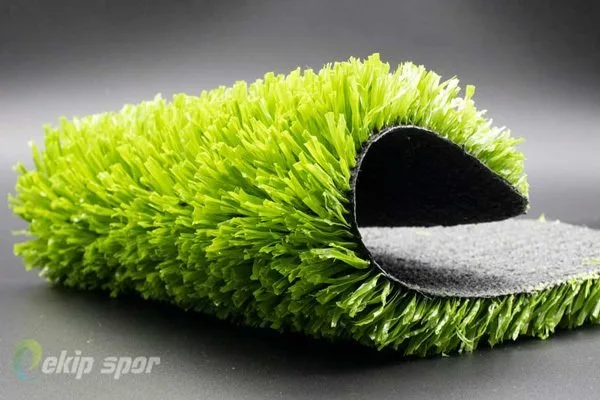
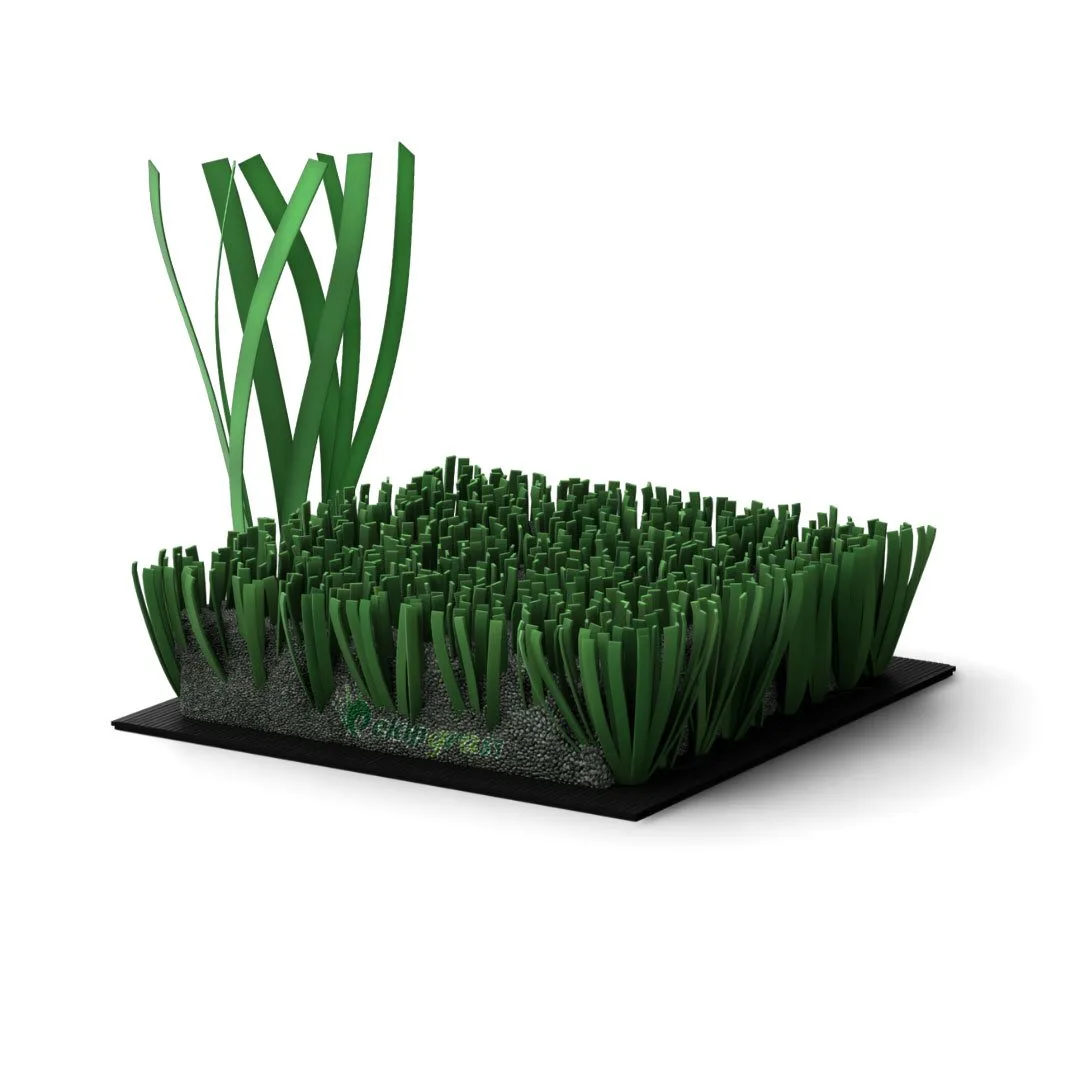
A synthetic grass tennis court uses a short pile filled with sand close to the fibre tips. Our Tenisol Turf is made in 16–28 mm piles; shorter piles play faster, longer ones softer. The carpet is porous, so rain drains through.
Players can slide a little, and the ball bounces lower and slower than on a hard court. Clubs, hotels and schools choose it where courts are used in all weather and daily maintenance has to stay low.
Side by side
Tennis court surfaces compared
| Ekip Flex | Acrylic hard court | Sand-filled synthetic grass | |
|---|---|---|---|
| ITF pace | Category 2, Medium-slow (classified, valid to 24.07.2027) | Most acrylic surfaces fall in Category 3, Medium (ITF); our acrylic systems are not ITF-classified | Most artificial grass falls in Category 5, Fast (ITF); Tenisol is not ITF-classified |
| Bounce | Even, slower after the bounce | Firm and even | Lower and slower |
| After rain | Play when the surface is dry | Play when the surface is dry | Water drains through the carpet |
| Base | Asphalt or concrete | Asphalt or concrete | Porous asphalt or stone |
| Routine care | Sweeping, washing | Sweeping, washing, recoat as it wears | Brushing, sand top-up at the baselines |
| Also suits | Club and coaching courts | Basketball and multi-use courts | Hotels, schools, padel-style clubs |
Products for courts
Turf we make for tennis and racket courts

ITF Court Pace Classification
Where Ekip Flex sits on the ITF pace scale
The ITF measures how a ball's speed and angle change when it hits the surface, and expresses the result as a Court Pace Rating (CPR). Surfaces are grouped into five categories, from slow to fast. The rating belongs to the surface as tested; changes in top-coat texture or sand level change the pace, so an installed court should follow the tested build.
An ITF classification is valid for three years from listing and, in the ITF's own words, does not imply ITF approval or endorsement. For that reason we describe Ekip Flex as "ITF-classified" rather than "ITF-approved".
Sources: ITF Technical Booklet 2025 (CPR bands, test method CS 01/02) · ITF classified surfaces list. Ekip Flex: test report 01/02-24-L-LFR-740-A, expiry 24 July 2027.
- 1SlowCPR 0–29
- 2Medium-slowCPR 30–34Ekip Flex
- 3MediumCPR 35–39
- 4Medium-fastCPR 40–44
- 5FastCPR 45+
Planning
How much space does a tennis court need?
The playing court is 23.77 m long and 10.97 m wide for doubles (8.23 m for singles). The ITF Rules of Tennis recommend at least 6.40 m behind each baseline and 3.66 m beside each sideline. With that run-off, one court needs an area of 36.57 m by 18.29 m, about 669 m². The surface covers the whole area, so this is also the basis for the quote.
| Court length | 23.77 m |
|---|---|
| Width, doubles / singles | 10.97 m / 8.23 m |
| Run-off behind each baseline | 6.40 m minimum |
| Run-off beside each sideline | 3.66 m minimum |
| Total area, one court | 36.57 × 18.29 m = 668.9 m² |
From survey to first serve
How we build a tennis court
Site check
We review the ground or the existing court from your photos and a site visit, and agree the surface.
Base
The sub-base and slab are built or repaired to an even fall so water runs off or drains through.
Surface
Ekip Flex, acrylic coats or synthetic grass with sand infill are installed to the specified build.
Lines and equipment
Lines are marked; posts, net, fencing and lighting are added if they are in the scope.
Handover
You receive the care instructions for the surface you chose.
Maintenance
Tennis court maintenance
Ekip Flex and acrylic courts
Sweep regularly and wash off dirt, leaves and moss. Repair small cracks early. On acrylic courts the colour coats wear with play and are renewed with a recoat.
Synthetic grass courts
Brush regularly so the sand stays evenly spread, top up sand at the baselines where play is heaviest, and remove leaves and debris before they break down in the pile.
Questions
Questions about tennis court surfaces
What does ITF Category 2 Medium-slow mean?
The ITF groups tennis surfaces into five pace categories, from 1 (slow) to 5 (fast). Category 2, Medium-slow, covers a Court Pace Rating of 30 to 34: the ball keeps less of its speed after the bounce than on a fast court, so players have more time. Ekip Flex holds this classification until 24 July 2027, for the surface built as tested.
Is an ITF classification the same as ITF approval?
No. The ITF classifies a surface product by its measured pace and states that classification does not imply approval or endorsement. A classification lasts three years from listing; Ekip Flex is classified until 24 July 2027.
Hard court or synthetic grass: which is better for a club?
Hard courts give a firm, consistent bounce and can be shared with basketball, but they must dry before play after rain. Sand-filled synthetic grass is softer, plays lower and slower, drains through and needs little daily work, which suits clubs and hotels with year-round use. Many clubs build some courts of each type.
How big is the area for one tennis court?
With the ITF's minimum run-off of 6.40 m behind each baseline and 3.66 m at each side, one doubles court needs 36.57 m by 18.29 m, about 669 m². The surface is laid over the whole area.
Can an old court be resurfaced?
Often, yes. If the asphalt or concrete is sound, cracks are repaired and the base is levelled before a new surface goes on. Synthetic grass can also be laid over a sound hard court if water can drain away. If the slab has moved or holds water, it has to be repaired or rebuilt first. We assess this from photos and a site visit.
What do you need from us for a quote?
The number of courts and whether they sit in a block, the location, the existing base (new ground, asphalt, concrete or an old court), the surface you prefer, and whether posts, nets, fencing and lighting should be included. Photos of an existing court help.
Planning a tennis court?
Send us the number of courts, the location and the surface you have in mind. We reply with the build-up, the area and a quote.
- Number of courts and layout
- Country and city
- Existing base or new ground
- Preferred surface
- Posts, net, fencing, lighting