
Summarize this article with AI Open a summary of this article in your preferred assistant
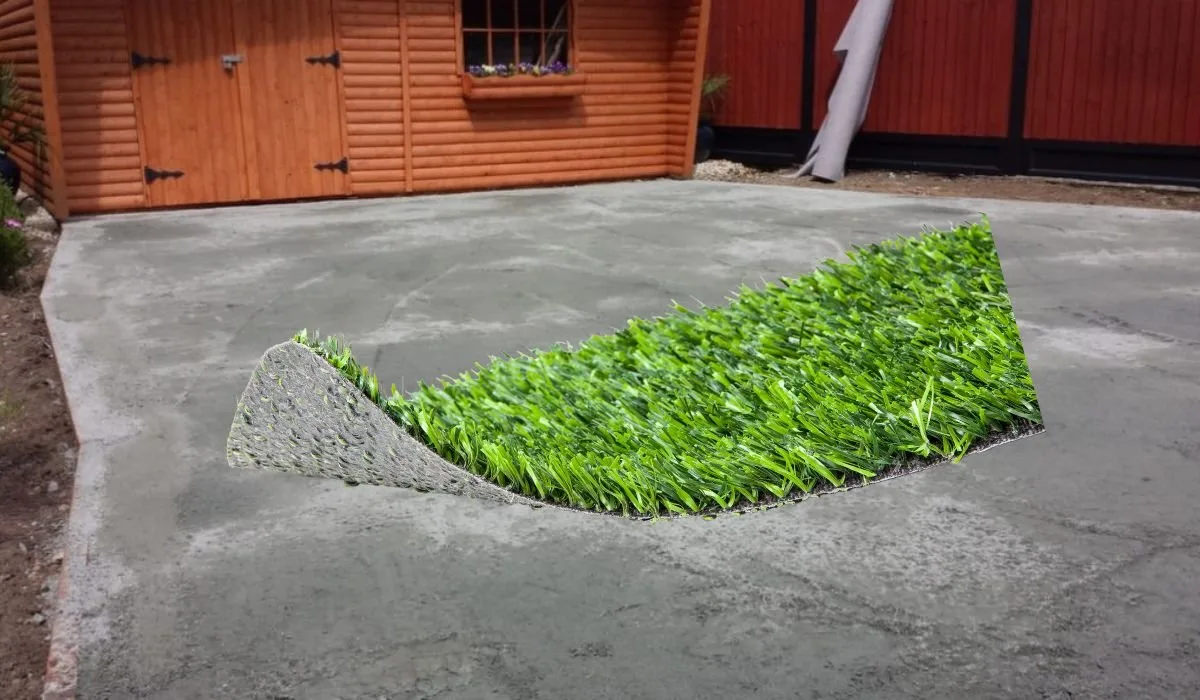
Granite dust is finely crushed granite used as a thin laying course on top of the compacted stone sub-base under artificial grass. Dampened and compacted, it forms a firm, smooth surface for the turf to lie flat on. It is a base material, not an infill: it goes under the grass and is never brushed into the pile.
Granite dust is finely crushed granite, a by-product of quarrying, used as the thin laying course on top of the compacted stone sub-base under artificial grass. When it is dampened and compacted it forms a firm, smooth surface, so the grass lies flat without showing the stones below. It is a base material, not an infill: it goes under the grass and is never brushed into the pile.
What is granite dust?
When granite is crushed into aggregate, the finest particles are screened off as dust. The result is a grey mix of fine grains and very small stone fragments. Because the particles are angular and of mixed sizes, they lock together under compaction better than rounded sand does.
Granite itself is a hard, durable rock, so the dust does not break down quickly once it is compacted under the grass. It does not feed plants and is not meant to: under artificial grass its only job is to give a stable, even surface.
Suppliers sell it under several names, such as granite dust, granite fines or crusher dust. The exact grading varies by quarry, so ask the supplier for the product intended as a laying course.
Where does granite dust go in the base?
A garden lawn of artificial grass usually sits on a layered base. Granite dust is the top mineral layer, directly under the weed membrane or the grass.
| Layer (bottom to top) | Material | Role |
|---|---|---|
| Subgrade | Existing soil, compacted | Footing |
| Sub-base | Crushed stone | Strength and drainage |
| Laying course | Granite dust | Smooth, level, firm surface |
| Membrane (often) | Permeable geotextile | Reduces weeds from below |
| Surface | Artificial grass | Finished lawn |
The full installation sequence, from excavation to the final brush, is covered in how to install artificial grass.
How does granite dust compare with sharp sand?
Sharp sand is the other common laying course. Both work when they are laid and compacted properly, but they behave differently.
- Granite dust compacts into a firm layer that resists movement under foot traffic. Its fine particles slow drainage compared with clean stone, so it should be kept thin and laid over a free-draining sub-base.
- Sharp sand is easy to screed and drains freely, but it stays looser after compaction and can shift over time, especially at edges and in busy areas.
Many installers choose granite dust for lawns that take regular foot traffic, children's play or garden furniture, and accept sharp sand where it is the material available locally. Local availability and the supplier's grading often decide the choice.
How do you lay and compact granite dust?
- Check that the stone sub-base below is compacted, level and has a slight fall for water to run off.
- Spread the granite dust evenly in a thin layer over the whole area.
- Screed it flat with a straight edge, filling low spots and removing high spots.
- Dampen the surface lightly with a hose. Dry dust does not bind; a saturated layer turns to mud.
- Compact it with a plate compactor, working in overlapping passes, then check the level again and correct any hollows.
To estimate how much to order, multiply the area by the planned layer thickness and add an allowance for compaction and levelling. Granite dust is usually sold by weight, so ask the supplier to convert the volume to tonnes for their product, and order a little extra to fill hollows found during the final level check.
The finished surface should be firm enough that footprints barely mark it. Lay the membrane and the grass soon after, before rain or traffic disturbs the layer.
Is granite dust the same as infill?
No. Infill is material brushed into the grass pile after laying. For garden lawns this is usually rounded silica sand, used only where the product calls for it. Granite dust has angular, dusty particles and belongs under the grass. Brushed into the pile, it would stain the fibres and hold dirt.
Some landscape grasses need no infill at all. Ekip's Lokilux Grass is listed with infill not required, as is Lokisoft Grass.
What problems does a poor laying course cause?
- Soft spots and dips where the layer was too thick or not compacted
- Standing water where the dust was laid over clay without a stone sub-base
- A rippled surface where stones from the sub-base show through a layer that is too thin
- Loose patches where the dust was compacted dry
Garden base questions
Ekip Grass manufactures landscape grass in Dilovası, Kocaeli, Türkiye. Garden products are listed under landscape grass, and questions about a base build-up can be sent through the contact page.
0 comments
Leave a comment
Your comment will be published after review.