
Summarize this article with AI Open a summary of this article in your preferred assistant
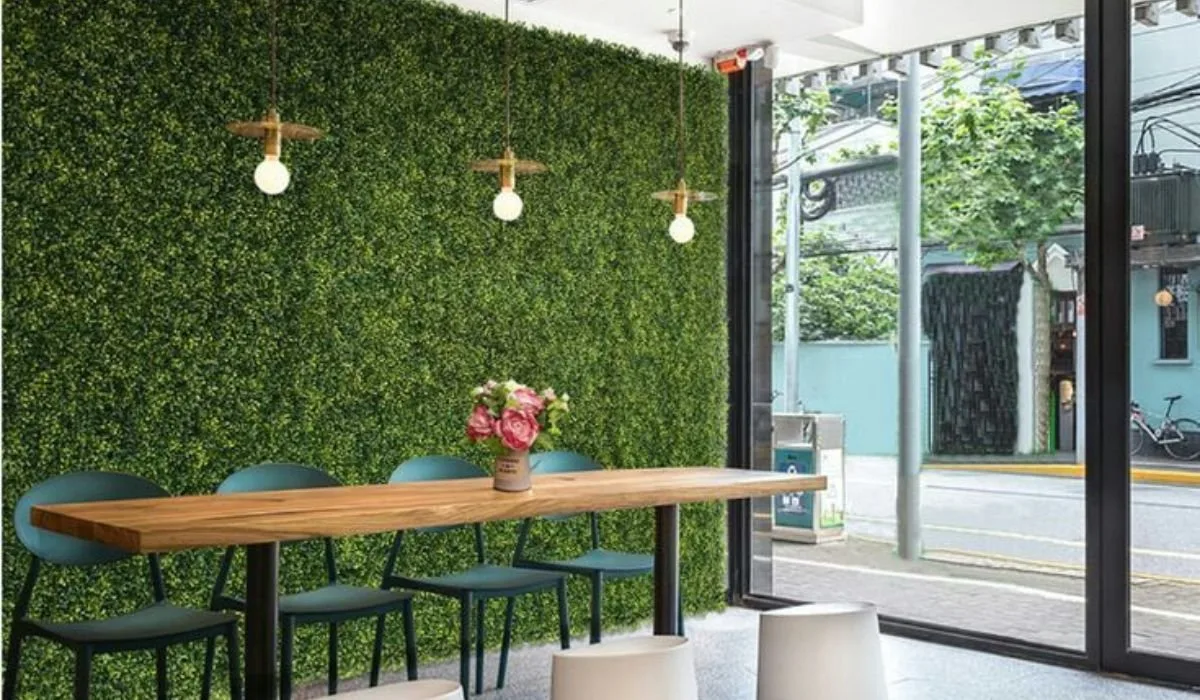
An artificial grass wall is synthetic turf fixed vertically to a wall, fence or panel to give a green surface without soil or watering. It is used for garden boundaries, balcony screens, shop and event backdrops and office feature walls. The main decisions are the carpet, the substrate and fixing, and, indoors, fire safety.
An artificial grass wall is synthetic turf fixed vertically to a wall, fence or panel to give a green surface without soil, irrigation or plant care. It is used for garden boundaries, balcony screens, shop windows, event backdrops, office feature walls and photo corners. The three decisions that shape the result are the carpet, the substrate and fixing method, and, for indoor walls, fire safety.
What is a grass wall?
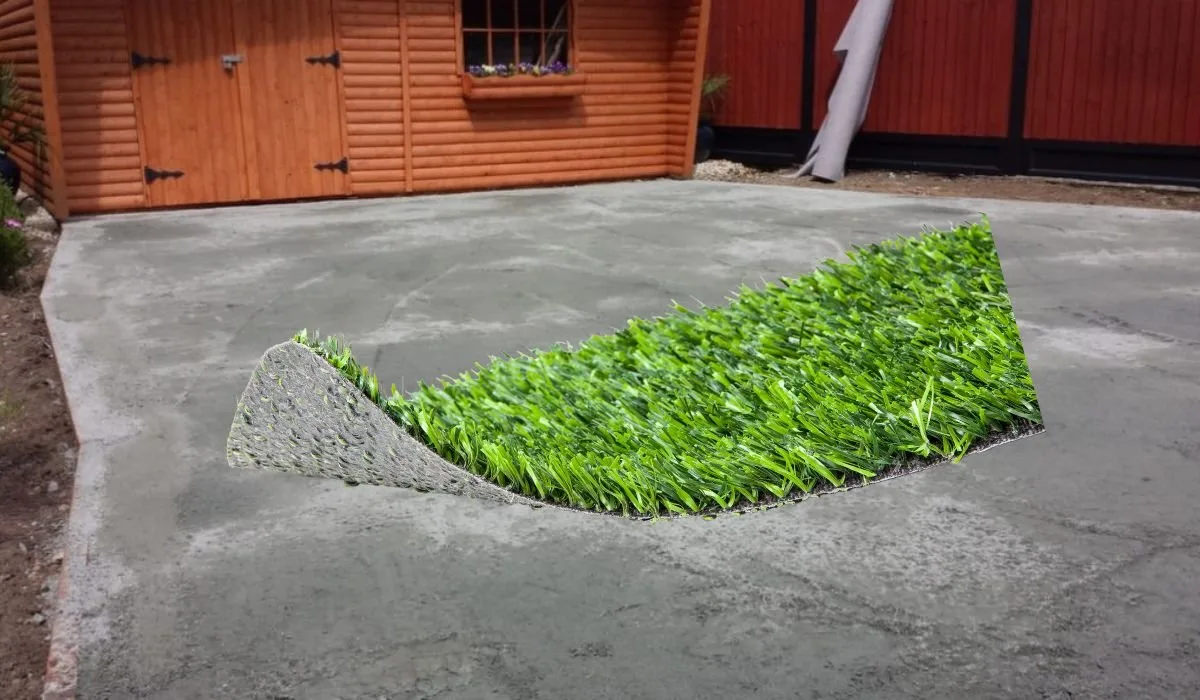
The term covers two different products. The first is rolled artificial grass, the same type of carpet used on the ground, cut to size and fixed to a flat backing. It gives a uniform lawn-like surface.
The second is the artificial hedge or foliage panel: small square tiles of plastic leaves that clip together. These imitate boxwood, ivy or mixed foliage rather than grass. This article focuses on rolled grass, but the planning points apply to both.
Neither should be confused with a living green wall, which holds real plants with an irrigation system and needs ongoing horticultural care.
Outdoor ideas
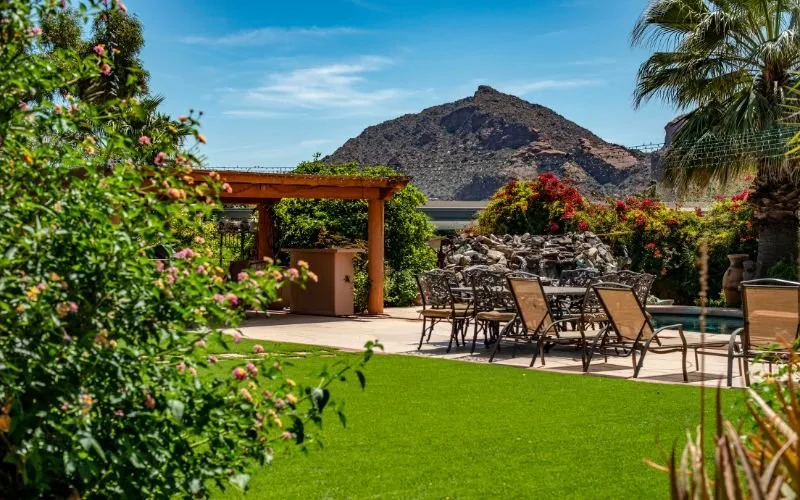
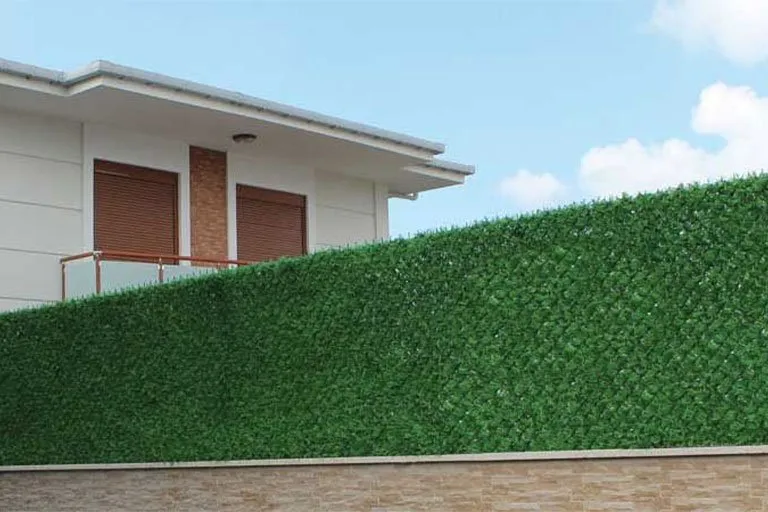
- Garden boundary walls: covering a plain block or rendered wall makes a small garden feel greener and continues the line of an artificial lawn up the wall.
- Balcony and terrace screens: turf fixed to a frame or railing panel adds privacy where planters would be too heavy.
- Bin and utility enclosures: a grass-covered timber box hides bins, meters or pool equipment.
- Pool and spa areas: a green backdrop behind loungers, kept clear of constant splash so dirt does not collect in the pile.
Indoor and commercial ideas
- Shop windows and stands: a portable grass panel gives a seasonal or natural theme and can be reused.
- Office feature walls: often used behind reception desks or in meeting rooms, sometimes with a cut-out or mounted logo.
- Photo walls: at weddings, launches and events, a grass wall makes a simple background for photographs.
- Cafés and restaurants: partial walls or ceiling-height panels in seating areas.
Which turf suits a wall?
On a wall, people see the carpet from the front and rarely walk on it, so appearance matters more than resilience. Short to medium pile heights look tidy at eye level and do not droop. A denser carpet hides the backing better, which matters because the wall is seen up close.
Lay all pieces with the pile leaning the same way, usually downwards, so the colour looks even and rainwater runs off outdoors. Ekip Grass landscape grass is used on request for decorative wall applications planned by architects. For a specific wall, agree the substrate, fixing method and, indoors, the fire requirements before ordering.
| Option | Look | Water and care | Typical use |
|---|---|---|---|
| Rolled artificial grass | Uniform lawn surface | No watering; occasional brushing or rinsing | Boundary walls, backdrops, feature walls |
| Artificial foliage panels | Hedge or leaf texture | No watering; dusting | Screens, shop interiors, events |
| Living green wall | Real plants | Irrigation, feeding and pruning | Building facades, interiors with plant care staff |
How is artificial grass fixed to a wall?
Turf is rarely fixed straight onto masonry. A flat substrate gives a better result and makes removal easier later.
- Substrate: fix exterior-grade boards or a timber or metal batten frame to the wall. Outdoors, leave a small gap behind it so the wall can breathe and water can drain.
- Cutting: cut the carpet from the back with a sharp blade, following the rows of stitches so the edges stay clean.
- Fixing: bond the carpet to the board with an adhesive suited to the backing and the climate, or use stainless staples or screws with washers along the edges and at intervals across the panel.
- Seams: butt the pieces closely and brush the pile over the joint. Check that the pile direction matches before fixing.
- Edges: finish the top and sides with a capping strip or timber trim so the cut edge is protected and water does not get behind it.
What should you check before you start?
Fire safety indoors. Artificial grass yarns are plastics. Building regulations for wall linings in shops, offices, restaurants and escape routes are usually stricter than for floors. Ask the supplier for a fire test classification recognised in your country and confirm with the building owner or fire consultant that it meets the requirement for that room.
Weather outdoors. Sun, wind and rain act on a wall differently from a lawn. Check that the carpet is UV stabilised, that fixings are corrosion resistant, and that the frame can take wind load.
Care. Dust and pollen collect in the pile. Brush the wall, use a vacuum on low suction indoors, or rinse it outdoors. The general routine in our guide on how to clean artificial grass also applies to walls.
How Ekip Grass can help
Ekip Grass produces landscape grass at its factory in Dilovası, Kocaeli, Türkiye. For ground-level ideas that combine a lawn with a wall, see our artificial grass landscaping ideas. For a decorative wall project, send the wall size, indoor or outdoor location and fixing plan through the contact page.
Frequently asked questions
Can artificial grass be used on indoor walls?
Yes, it is used in shops, offices and event spaces. Because the yarns are plastics, check the fire safety rules for wall linings in that room and ask the supplier for a recognised fire test classification before installation.
How do you attach artificial grass to a wall?
The usual method is to fix boards or a batten frame to the wall, then bond or staple the carpet to it and finish the edges with a capping strip. Fixing turf straight onto masonry is harder to do neatly and harder to remove.
Does an artificial grass wall need maintenance?
It needs no watering, but dust, pollen and leaves collect in the pile. Brush or vacuum it indoors and rinse it with water outdoors when it looks dull.
Which way should the grass blades point on a wall?
Lay all pieces with the pile leaning the same way, usually downwards. This keeps the colour even across the wall and helps rainwater run off outdoors.
0 comments
Leave a comment
Your comment will be published after review.