
Summarize this article with AI Open a summary of this article in your preferred assistant
Artificial grass suits landscaping where natural lawn is hard to keep: shaded corners, roof terraces, small urban gardens, play areas, pet runs and hotel or restaurant gardens. Each idea depends on a stable, draining base, a carpet matched to the traffic and a firm edge detail.
Artificial grass works in landscaping wherever a green surface is wanted but a natural lawn is hard to keep: shaded corners, roof terraces, small urban gardens, play areas, pet runs and the edges of paths and pools. The ideas below are grouped by space. For each one, the result depends less on the idea itself and more on three details: a base that drains, a carpet suited to the traffic, and a firm edge.
Where does artificial grass work in a landscape?
Natural grass needs sun, water, mowing and time to recover after use. Where one of these is missing, a synthetic surface is often the more practical choice. Typical locations are:
- small front and back gardens where mowing equipment is hard to store
- areas under trees or between buildings that get little direct sun
- roof terraces and balconies, where soil is too heavy or not allowed
- children's play corners and pet runs that turn to mud after rain
- hotel, restaurant and office gardens that must look the same all year
Artificial grass does not suit every spot. It is a poor choice where a surface must absorb heavy vehicle loads, or where roots, soil life and rainwater infiltration into planted ground are part of the design goal.
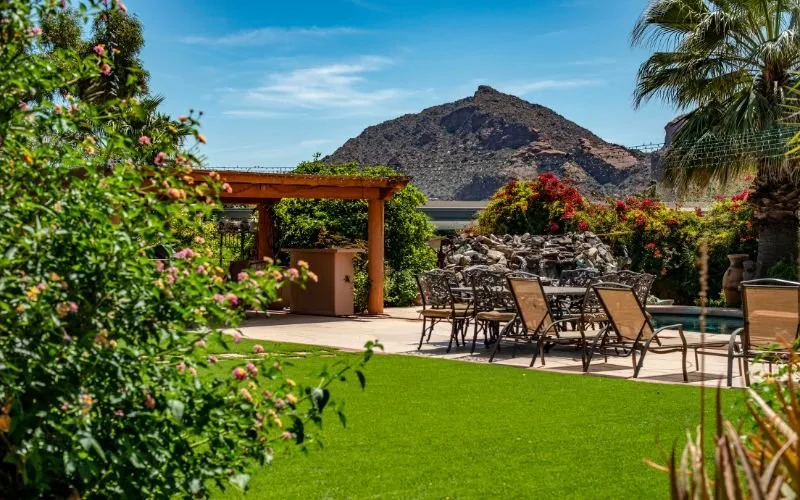
Garden ideas: lawns, strips and borders
The simplest idea is a full lawn replacement. A rectangle or a gently curved shape is easier to lay and seam than a lawn with many tight corners, so keep the outline simple where you can.
Strips of grass between stepping stones or large paving slabs soften a hard patio. The strips need the same compacted base as the paving, or they sink over time. Grass borders around raised beds and planters give a clean line without trimming, but keep irrigation from the beds pointed away from the turf so soil does not wash onto it.
Under trees, artificial grass stays green where real grass thins out. Leaves and needles still fall on it, so plan for regular brushing or a leaf blower.
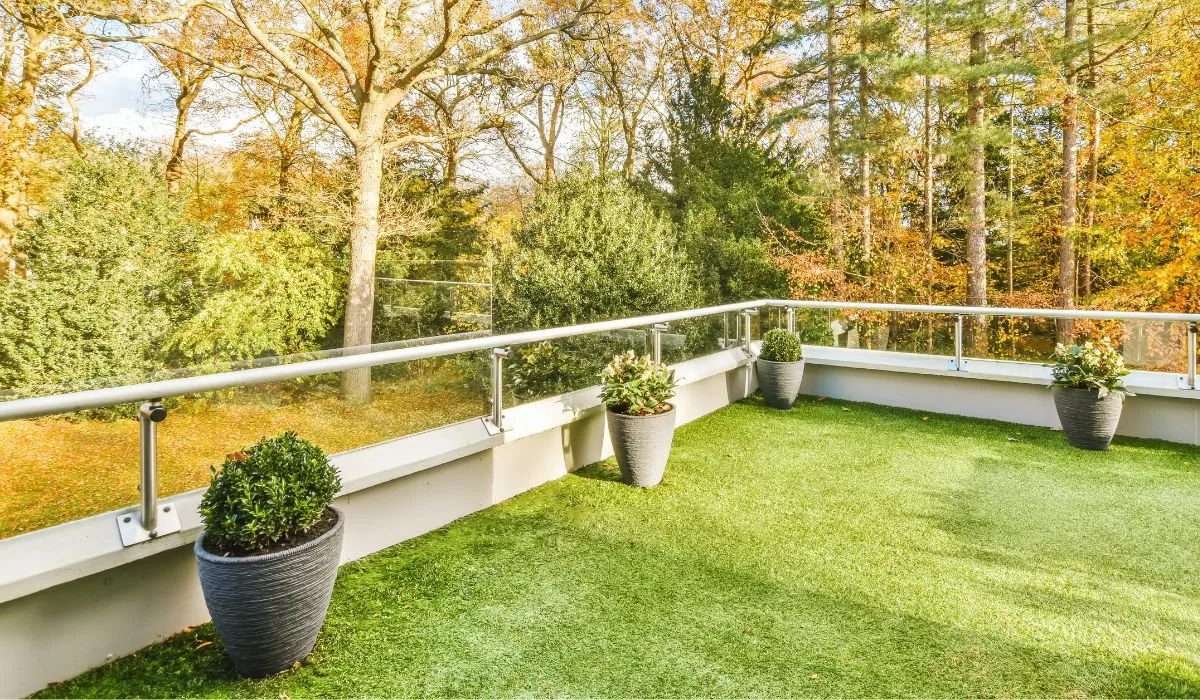
Terraces, balconies and roof gardens
On a hard surface the turf is laid over the existing tiles or a drainage mat. Water must be able to pass through the backing and run off along the original slope to the drains. Check that no seam or edge blocks the drain outlets.
On roofs, ask a structural engineer to confirm the load the roof can take before adding any layer, and avoid fixings that pierce the waterproofing membrane. Weighted edges, double-sided tape on a clean tile, or edge profiles are common alternatives to nails.
Play areas and pet runs
For a play corner, artificial grass keeps children off mud and dust. Under climbing frames, swings and slides, the surface alone is usually not enough: a shock pad is laid under the turf, and the required impact protection depends on the fall height of the equipment and on the playground safety rules in your country. Ask the equipment supplier which rule applies.
For dogs, choose a carpet with good drainage through the backing and lay it on a free-draining base. Solid waste is picked up, and the area is rinsed with water regularly. Our guide on how to clean artificial grass covers the routine.
Hotels, restaurants and public spaces
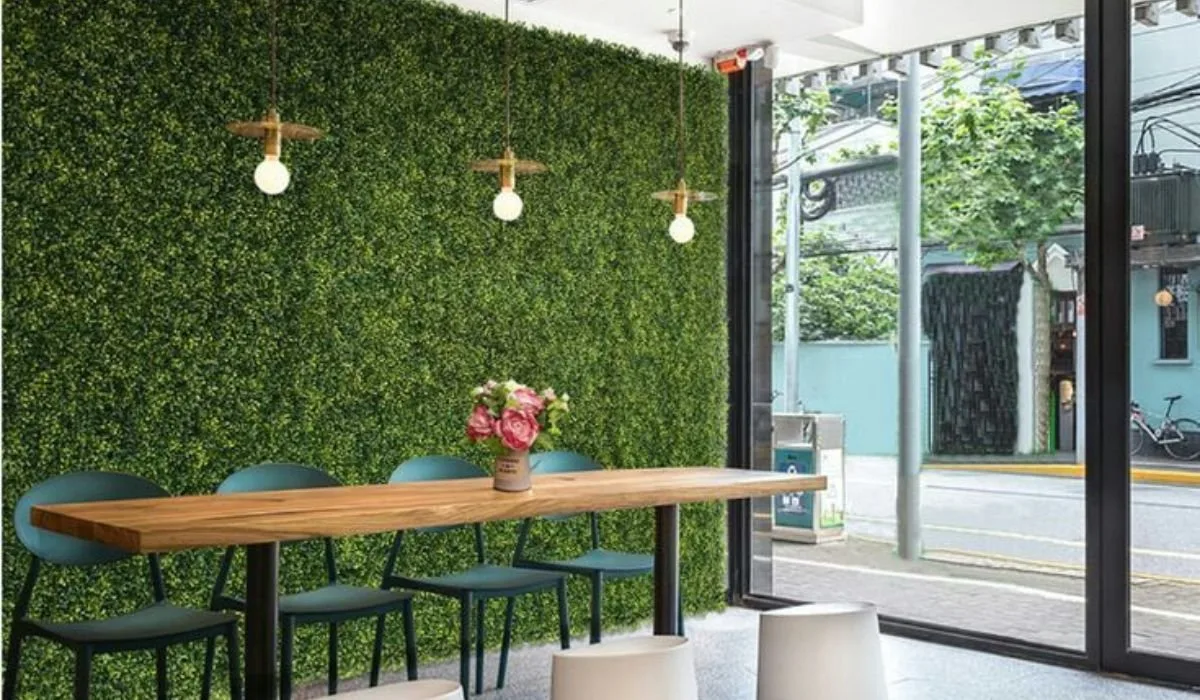
Commercial users mainly want a surface that looks the same in every season and in every guest photo. Common uses include poolside lounges, rooftop bars, event lawns, wedding areas, office courtyards, showroom floors and exhibition stands.
For these spaces, plan the traffic. A garden walkway used by hundreds of guests a day needs a denser, more resilient carpet than a decorative strip that few people step on.
How do you choose a landscape carpet?
Landscape grass differs from sports turf: the aim is appearance and comfort, not ball roll or player traction. The main choices are the yarn type, density and colour mix. Ekip Grass makes two landscape grasses; their published specifications are below.
| Property | Lokilux Grass | Lokisoft Grass |
|---|---|---|
| Yarn | Curled (texturised) and straight monofilament yarns tufted together | Monofilament only |
| Infill | Not required | Not required |
| Use | Gardens, terraces, landscaping | Gardens, terraces, hotel and restaurant gardens with light traffic |
A carpet with a curled thatch at the base, such as Lokilux Grass, helps the straight blades stand back up after foot traffic; it is made in three types: Lokilux Eco, Lokilux 10,500 dtex and Lokilux 5200. A monofilament-only carpet such as Lokisoft Grass feels smoother underfoot and fits areas with lighter use.
What should you check before you start?
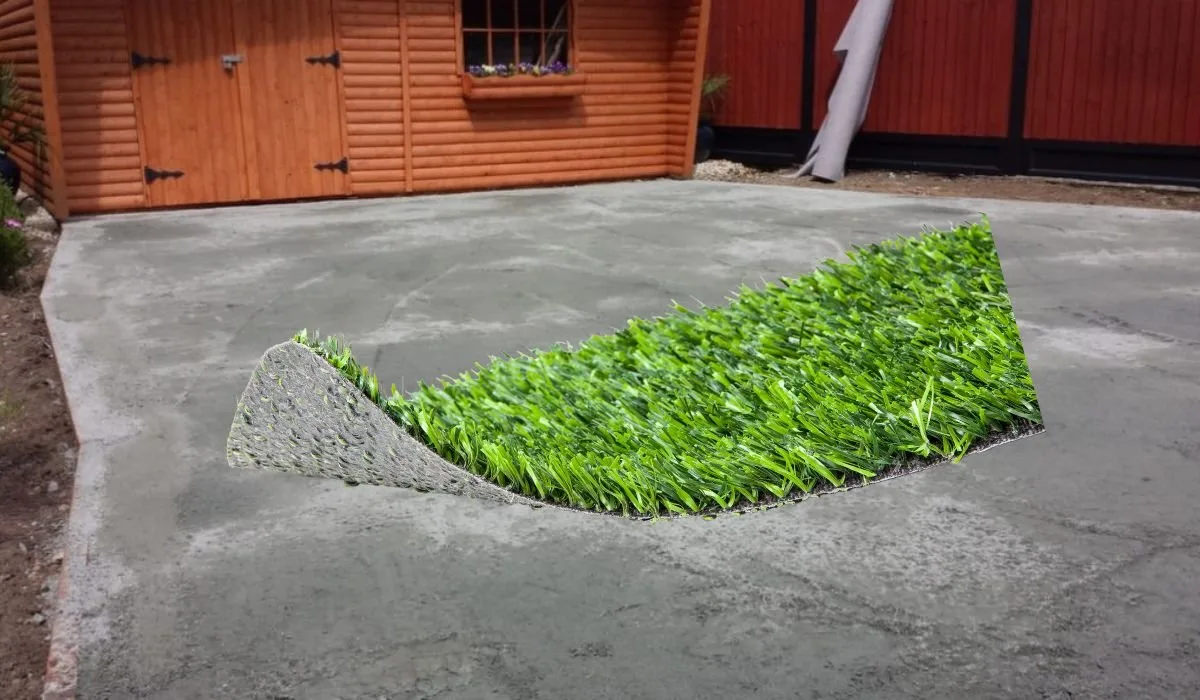
- Base: on soil, remove the topsoil and roots, then lay and compact a crushed stone or granite dust layer. The steps are in our guide on how to install artificial grass.
- Drainage: the base needs a slight fall or a free-draining layer so water does not pond under the carpet.
- Edges: fix the perimeter with edging boards, kerbs or pegs so the carpet cannot lift or shift.
- Heat: synthetic yarn gets warmer than natural grass in direct sun. Shade, lighter colour mixes and a quick rinse on hot days help in sunny spots.
- Pile direction: lay all rolls with the pile leaning the same way, ideally towards the main viewing point, so the colour looks even.
How Ekip Grass can help
Ekip Grass produces its landscape grasses at its factory in Dilovası, Kocaeli, Türkiye. You can compare the range in the landscape grass category and send your area size, location and intended use through the contact page to get a recommendation for a specific project.
Frequently asked questions
Can artificial grass be laid directly on soil?
Not directly. The topsoil and roots are removed first, and a compacted, free-draining layer such as crushed stone or granite dust is laid as a base so the carpet stays level and water can drain.
Does landscape artificial grass need sand or rubber infill?
Ekip Grass landscape carpets, Lokilux and Lokisoft, are listed as not requiring infill. Some installers still add a light sand layer for weight on specific projects, so follow the installer's advice for your site.
Is artificial grass suitable for a roof terrace?
Yes, if the roof can carry the added load and water can drain through the backing to the existing drains. Confirm the load with a structural engineer and avoid fixings that pierce the waterproofing membrane.
Is artificial grass suitable for dogs?
It can be used in pet runs when the carpet drains through the backing and is laid on a free-draining base. Solid waste should be picked up and the surface rinsed with water regularly.
0 comments
Leave a comment
Your comment will be published after review.