
Summarize this article with AI Open a summary of this article in your preferred assistant
Hybrid grass is a natural grass pitch reinforced with synthetic fibres, so players play on living grass and the pitch still needs light, mowing, water and recovery time. Artificial grass is fully synthetic, needs no growing conditions and suits pitches used most days, but it does not regrow and is replaced at the end of its life.
Hybrid grass is a natural grass pitch reinforced with a small share of synthetic fibres, while artificial grass is a fully synthetic surface. On a hybrid pitch players touch living grass and the fibres hold the surface together where it wears; on artificial grass players touch plastic yarn and infill. Hybrid grass needs full natural grass care and good light, and artificial grass can be used for more hours with no growing conditions.
Hybrid grass in brief
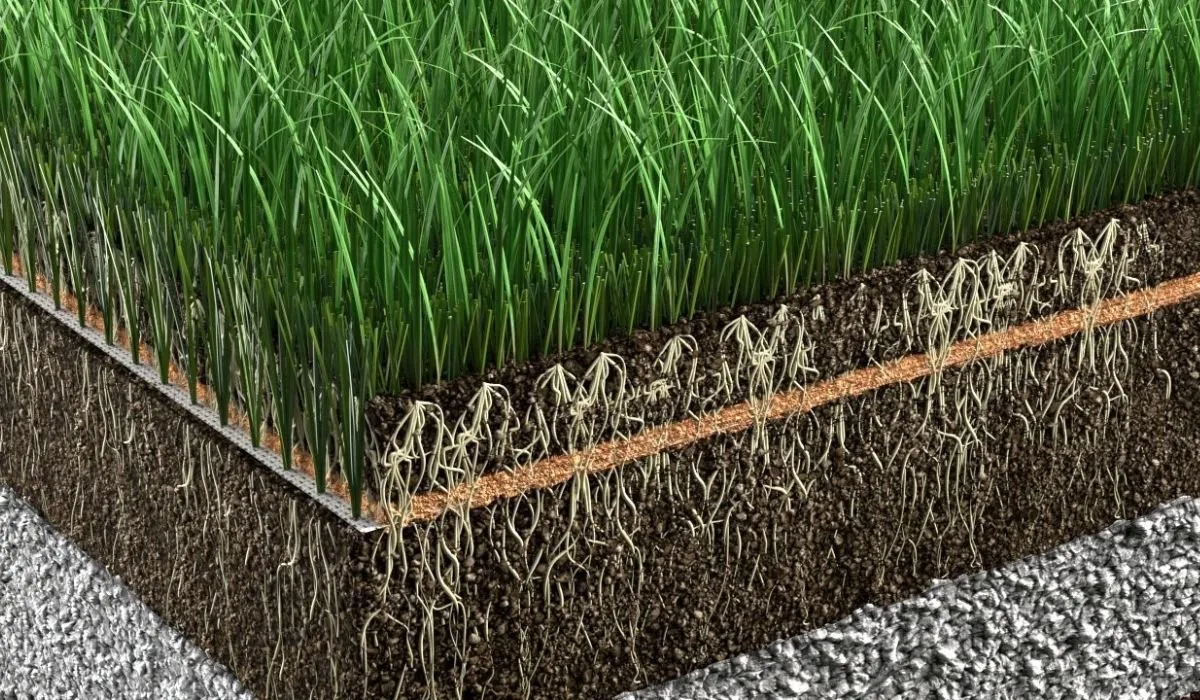
A hybrid pitch is natural grass whose rootzone is reinforced with synthetic fibres; the roots grow around the fibres and anchor them. The three ways of adding the fibres, and how hybrid compares with fully natural turf, are explained on our hybrid grass page.
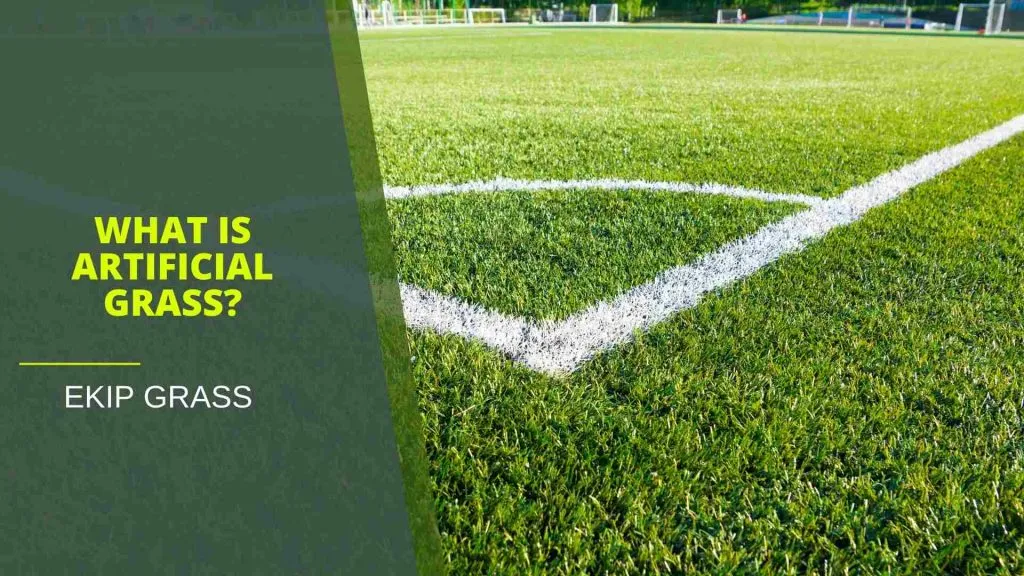
What is artificial grass?
Artificial grass is a carpet of synthetic yarn tufted into a coated backing. For football it is usually long-pile turf filled with sand and a performance infill, laid on a drained, compacted base. Nothing grows, so it does not need light, mowing or feeding, and it is ready for play once installed. You can read more in what is artificial grass.
How do hybrid grass and artificial grass differ in use?
The main difference is recovery. A hybrid pitch is still grass, so heavy use wears the leaves and the grass needs time and growing conditions to recover. The fibres slow the damage and help the pitch stay playable, but they do not remove the need for rest.
An artificial pitch does not regrow and does not need rest in the same way. It wears gradually instead: the yarn flattens and wears down, infill moves, and the carpet is eventually replaced. This is why artificial turf is common on community, school and training pitches that are booked every day.
Both surfaces are recognised in football. Law 1 of the IFAB Laws of the Game allows a wholly natural surface or, if competition rules permit, a wholly artificial surface or an integrated combination of artificial and natural materials (a hybrid system).
Which one fits your site?
The choice depends mostly on the site, the match calendar and the maintenance team. The table gives a starting point.
| Situation | Hybrid grass | Artificial grass |
|---|---|---|
| Players or competition want a natural grass surface | Fits | Does not fit |
| Pitch is used most days by many teams | Limited by grass recovery | Fits |
| Strong shade from stands or a roof | Needs grow lights or may not grow | Fits |
| Trained groundsman, irrigation and mowers available | Fits | Not needed |
| Pitch must be ready soon after construction | Needs a grow-in period | Ready after installation |
| Dry climate with little water for irrigation | Difficult | Fits |
How do maintenance and cost compare?
Hybrid grass carries the full care routine of a natural pitch: mowing, irrigation, fertiliser, aeration, overseeding and disease control. The synthetic fibres add a few points to watch, for example making sure scarifying and decompaction machines are set so they do not pull the fibres out.
Artificial grass needs brushing, debris removal, infill levelling and top-up, and periodic deep cleaning. It uses specialist equipment but no fertiliser or mowing. When comparing costs, look at construction, yearly maintenance labour and machinery, water and energy, the number of playable hours you need and the end-of-life cost of replacing or renovating the surface. Prices vary too much by site and country to give fixed figures.
Can a club use both?
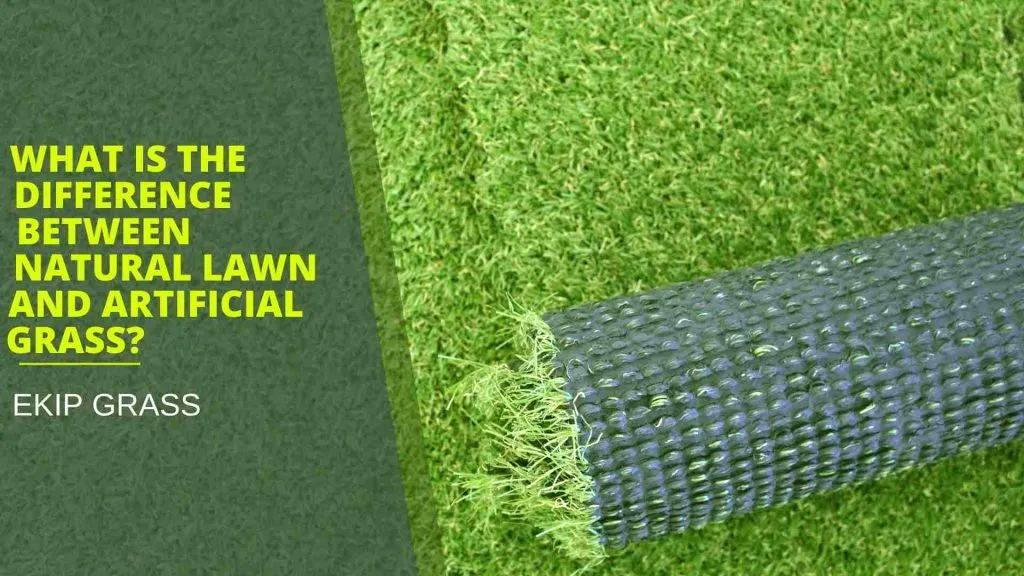
Yes. A common plan is a natural or hybrid grass match pitch, protected from overuse, with an artificial pitch next to it for daily training, youth teams and community bookings. Our comparison of natural grass vs artificial grass covers the fully natural option.
Ekip Grass manufactures both hybrid grass systems and artificial football turf at its plant in Dilovası, Kocaeli. For artificial pitches, see the football grass systems.
0 comments
Leave a comment
Your comment will be published after review.