
Summarize this article with AI Open a summary of this article in your preferred assistant
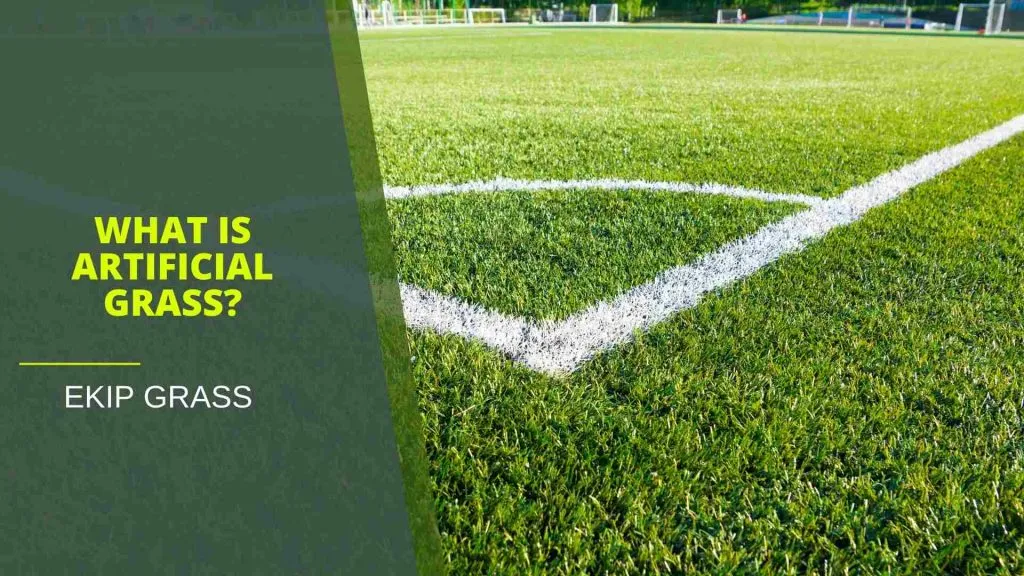
Artificial grass is a surface of synthetic yarns, usually polyethylene or polypropylene, tufted into a backing that is sealed with latex or polyurethane. Sports versions are often filled with sand and rubber or organic granules. It is used on football pitches, courts and gardens, and football competitions accept it where their rules permit.
Artificial grass is a surface made of synthetic yarns that are stitched into a backing to look and play like a grass lawn or pitch. The yarns are usually polyethylene or polypropylene, the backing is sealed with a latex or polyurethane coating, and many systems are filled with sand or rubber granules between the fibres. It is used on sports pitches, courts, gardens, terraces and other places where natural grass is hard to keep in good condition.
What is artificial grass made of?
Every artificial grass carpet has three main parts. The first is the yarn, the visible "blades". Most modern yarns are polyethylene, which is soft and smooth. Polypropylene is used for some short, hard-wearing piles.
The second part is the primary backing, a woven or non-woven fabric that the yarn is tufted into. The third is the back coating, a layer of latex or polyurethane applied to the underside to lock each tuft in place. Most coatings are perforated so that rain can drain through the carpet into the base below.
Many sports systems add a fourth element: infill. Sand is brushed in first to hold the carpet down, and a performance infill such as rubber granules or an organic material goes on top to give the surface its cushioning and grip. Some systems also use a shock pad under the carpet.
What types of artificial grass are there?
Artificial grass is built differently for each use. Pile height, yarn shape, yarn weight (measured in dtex, grams per 10,000 metres of yarn) and the amount of infill all change from one type to another. The table shows the main groups.
| Type | Typical construction | Infill | Typical use |
|---|---|---|---|
| Long-pile sports turf (3G) | Long monofilament yarn | Sand plus rubber or organic infill | Football and rugby pitches |
| Non-infill sports turf | Straight and curled yarns tufted together | None or a small amount of sand | Small pitches, training areas |
| Short-pile court turf | Short fibrillated or texturised yarn | Usually sand | Tennis, padel, multi-use courts |
| Landscape grass | Soft monofilament, often mixed with curled yarn | Usually not required | Gardens, terraces, balconies |
As an example of a non-infill build, the Non-Infill Grass data sheet lists a pile height of 30–35 mm and 16,000 dtex, with no rubber granules and a small amount of silica sand. Court products are much shorter: Padel Grass is made in 11, 13 or 15 mm piles.
Where is artificial grass used?
Sport is the largest use. Football pitches, mini pitches, school playgrounds, tennis and padel courts, hockey and multi-sport areas use artificial turf because it can be played on for many hours a week and in most weather. FIFA notes that turf became a true alternative for football only with third-generation (3G) systems, which include both sand and rubber infill.
The second large group is landscaping. Gardens, roof terraces, balconies, pool surrounds, hotel and restaurant gardens, shop displays and event spaces use softer, denser carpets chosen for looks and comfort. You can see these products in the landscape grass range.
Is artificial grass allowed in football?
Yes, where the competition rules permit it. Law 1 of the IFAB Laws of the Game says the field of play must be wholly natural or, if competition rules permit, wholly artificial, and it also allows an integrated combination of artificial and natural materials (a hybrid system). The same law says artificial surfaces must be green.
For competition matches between national association teams and for international club competitions, Law 1 requires an artificial surface to meet the requirements of the FIFA Quality Programme for Football Turf, unless The IFAB grants an exception. Local leagues and schools follow their own competition rules.
What are the limits of artificial grass?
Artificial grass needs less work than a lawn, but it is not maintenance free. Leaves and dirt must be removed, sports pitches need regular brushing, and infill moves and has to be topped up. Our guide on how to clean artificial grass covers the routine.
The surface gets warmer than natural grass in direct sun, because plastic fibres do not cool themselves the way living leaves do. Rubber infill can migrate off a pitch if edges and drainage are not designed to hold it back. At the end of its life the carpet has to be removed and recycled or disposed of, so it is worth asking a supplier how the materials can be separated.
How is artificial grass produced at Ekip Grass?
Ekip Grass is the artificial grass brand of Ekip Spor, founded in 2006, and its factory is in Dilovası, Kocaeli, Türkiye. Yarn, tufting and coating are matched to the use, from football turf to garden grass. The company holds a TSE certificate for TS EN 15330-1 football turf and is a licensee of the FIFA Quality Programme for Football Turf; details are on the certificates page.
Frequently asked questions
Is artificial turf the same as artificial grass?
Yes. Artificial grass, artificial turf, synthetic grass and synthetic turf all describe the same kind of surface. AstroTurf is a brand name that many people use as a general term.
Does artificial grass need water?
It does not need watering to grow. Water is used to rinse the surface, to clean pet areas and, on some sports pitches, to cool the surface or change how the ball rolls.
What colour must artificial grass be for football?
The IFAB Laws of the Game state that artificial playing surfaces must be green. Line markings are added in other colours.
Does all artificial grass need infill?
No. Long-pile football turf normally uses sand and a performance infill, while many landscape grasses and non-infill sports products are built to stand up without rubber granules.

0 comments
Leave a comment
Your comment will be published after review.