
Summarize this article with AI Open a summary of this article in your preferred assistant
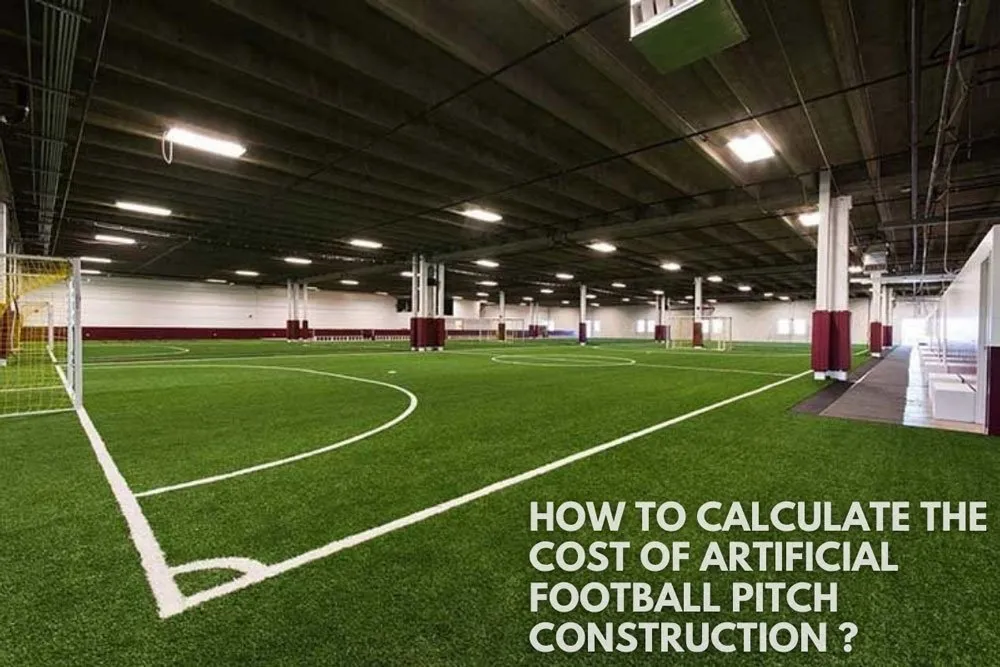
The cost of an artificial football pitch depends on its size, the existing ground, drainage, the turf system (shock pad and infill), fencing, floodlighting, any FIFA Quality field testing, and the region. A reliable price needs a site survey and an itemised quote; a fixed price per pitch without seeing the site is not meaningful.
The cost of an artificial football pitch depends mainly on three things: the size of the area, the condition of the ground underneath, and how much is included beyond the turf itself. The turf carpet is often a smaller share of the total than buyers expect. Excavation, drainage, the base layers, fencing and floodlighting can each cost as much as the turf, or more. For this reason a supplier cannot give a reliable price for a complete pitch before the site has been assessed.
What makes up the cost of an artificial football pitch?
A pitch project is a set of separate work packages. Ask for a quote that prices each package on its own line, so that offers from different contractors can be compared item by item.
| Cost item | What it covers | What changes the price |
|---|---|---|
| Site survey and design | Levels, soil, existing drainage, layout drawings | Site size, access, existing information |
| Earthworks and base | Excavation, geotextile, crushed stone layers, final levelling | Soil type, slope, depth of excavation |
| Drainage | Collector pipes, perimeter channels, connection to an outlet | Rainfall, soil permeability, distance to the outlet |
| Shock pad (optional) | Elastic layer laid under the turf | System design, required performance |
| Turf | Carpet, seaming, line marking | Area, pile height, yarn type |
| Infill | Sand plus performance infill such as SBR rubber, EPDM or other options | Infill type and quantity |
| Fencing and nets | Perimeter fence, ball-stop nets, gates | Fence height and length |
| Floodlighting | Poles, luminaires, cabling, controls | Required lighting level, number of poles |
| Testing | Laboratory and on-site tests for FIFA Quality certification | Whether certification is required |
| Transport and installation | Freight, installation crew, equipment | Distance, region, local labour costs |
How does pitch size change the cost?
Area drives most of the line items. Turf, infill and base materials are priced per square metre, while fencing and lighting grow with the perimeter. The IFAB Laws of the Game allow a full-size field of 90 to 120 m in length and 45 to 90 m in width, so the words "full size" alone cover a wide range of areas.
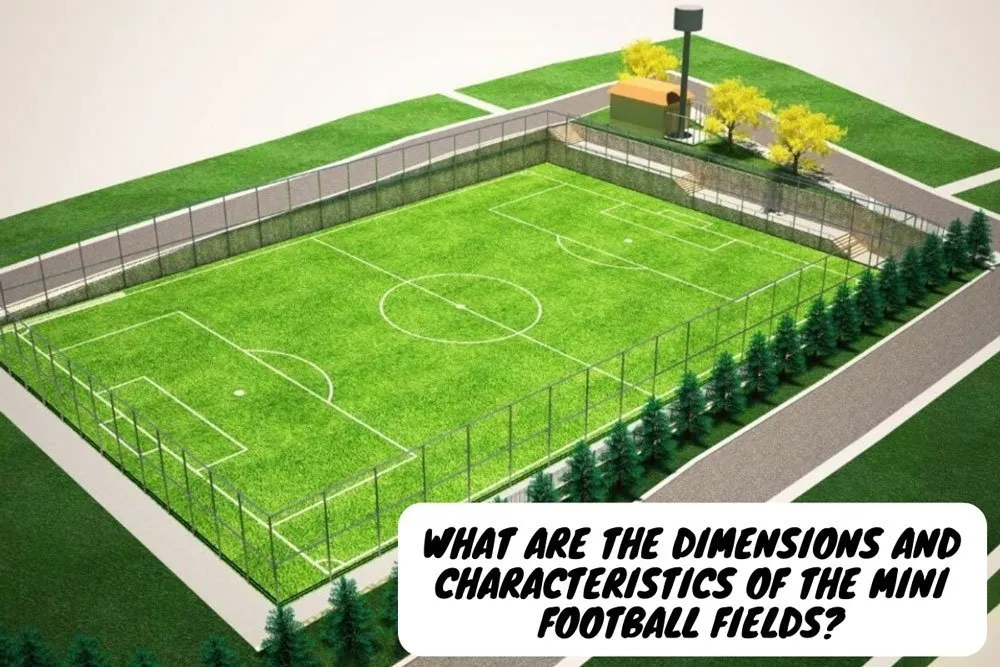
Small-sided pitches for five-a-side or seven-a-side play are much smaller in total. Their cost per square metre is often higher, because the fence, the lights and the mobilisation of the crew are spread over less area. Our guide to mini football pitch dimensions lists recommended sizes for each format.
Why do base works and drainage matter so much?
Artificial turf is laid on an engineered base. If the existing ground is soft clay, made ground or a slope, more excavation and more imported stone are needed. An existing asphalt or concrete slab may reduce earthworks, but it still needs a plan for how water will leave the surface.
Drainage design depends on local rainfall and on where the water can be discharged. These items are the hardest to estimate without a site visit, and they are where a low quote most often leaves something out. Check that every offer states the base build-up and the drainage layout in writing.
How do the shock pad, infill and turf affect the price?
The turf system is the combination of carpet, infill and, in some designs, a shock pad. A shock pad adds material and installation work, and it changes how much infill the system needs. Whether a pad is used depends on the system design and on the performance the pitch must reach.
Infill is usually a layer of sand for stability, topped with a performance infill. SBR rubber, EPDM and other infill materials differ in price, and some buyers set rules on infill material in their tenders. A non-infill design is another route: for example, Ekip's Non-Infill Grass uses no rubber granules and a small amount of silica sand. Pile height and yarn type also change the turf price; the systems are listed under football turf.
When does certification testing add to the cost?
Testing is a cost item only when the pitch must be certified. Under the FIFA Quality Programme for Football Turf, certification involves testing the product in the laboratory and then testing the final installation on site. FIFA awards the FIFA QUALITY mark to pitches that meet the standard for community and amateur pitches, and the FIFA QUALITY PRO mark to pitches intended for professional-level football.
The IFAB Laws of the Game require artificial surfaces used in international representative matches and international club competitions to meet the FIFA Quality Programme, unless The IFAB gives special dispensation. Other competitions set their own rules, so check with your league or federation before deciding whether field testing belongs in the budget.
How does the region affect the price?
The same pitch can be priced very differently in two countries. Freight, import duties, local labour rates, the availability of compaction and laser-levelling equipment, permits and the building season all play a part. Turf is shipped in rolls, so ask every supplier to state the delivery terms and which costs stop at the port and which continue to the site.
What does a turnkey pitch include, and how do you get a quote?
A turnkey pitch means one contractor delivers a playable field: survey, earthworks, base, drainage, turf, infill, line marking, goals, fencing and lighting, through to handover. A supply-only order covers the turf and infill, and a local contractor builds everything else. Turnkey simplifies responsibility; supply-only can suit buyers who already have a trusted builder.
For a quote you can compare, send the site location, the dimensions, photos of the ground, the intended use (commercial, school or club), whether certification is required, and whether fencing and lighting are needed.
Ekip Grass, the artificial grass brand of Ekip Spor, manufactures football turf in Dilovası, Kocaeli, Türkiye, and is a licensee of the FIFA Quality Programme for Football Turf. The football grass page describes its systems, and site details can be sent through the contact page for an itemised proposal.
Frequently asked questions
Can you give a price per square metre for an artificial football pitch?
The turf alone can be priced per square metre once the product is chosen. A complete pitch cannot, because base works, drainage, fencing and lighting depend on the site, so ask for an itemised quote.
Is a shock pad always needed under football turf?
No. Whether a shock pad is used depends on the system design and the performance the pitch must reach; some systems use one and others do not.
Does every artificial pitch need FIFA certification?
No. The IFAB Laws of the Game require the FIFA Quality Programme for artificial surfaces in international representative and international club competition matches; other competitions set their own rules. Check with your league or federation.
What information should I send to get a quote?
Send the site location, the dimensions, photos of the ground, the intended use, whether certification is required, and whether fencing and floodlighting are part of the project.


0 comments
Leave a comment
Your comment will be published after review.